
What happens when the consequences of climate change begin to outpace a country’s ability to adapt?
For South Africa, this question is becoming increasingly difficult to ignore. Rising temperatures, prolonged droughts, severe flooding and mounting pressure on natural resources are exposing vulnerabilities across the country’s economy, infrastructure and communities.
From water shortages and agricultural uncertainty to damaged infrastructure and growing economic pressures, the impact of climate change in South Africa extends far beyond environmental concerns. It influences the decisions that determine how communities live, how businesses operate and how institutions prepare for the future.
But is South Africa approaching a climate point of no return?
The answer requires an understanding of both climate science and the consequences of delayed action. While scientists have not identified a single tipping point for South Africa as a country, the risks associated with continued global warming are becoming increasingly significant.
The Intergovernmental Panel on Climate Change (IPCC) identifies southern Africa as a region experiencing substantial warming, with rising temperatures and climate extremes creating growing risks for water resources, food security, ecosystems and human wellbeing.
Yet the greatest challenge may not be environmental change alone. It may be the ability of leaders to recognise emerging risks, make difficult decisions and act before vulnerabilities become more costly to address.
South Africa stands at a crossroads where climate resilience, economic development and effective leadership must become interconnected priorities.
This blog outlines whether South Africa is approaching critical climate thresholds and examines the growing impact of climate change on water security, agriculture, infrastructure, business and economic development. It explores the meaning of climate tipping points, the consequences of delayed adaptation and the country’s evolving climate policy framework. The article also considers how business leaders, policymakers and institutions can strengthen resilience through informed decision-making, sustainable investment and long-term strategic planning.
TABLE OF CONTENTS
Why Is South Africa at a Climate Crossroads?
Climate change in South Africa is increasingly influencing decisions that extend beyond environmental management.
The country faces a combination of climate-related risks and existing development challenges, including poverty, unemployment, infrastructure pressures and unequal access to essential services.
These conditions can increase vulnerability when extreme weather events occur.
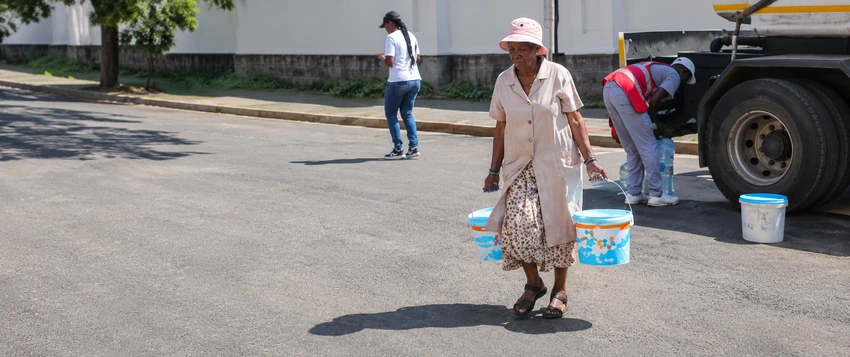
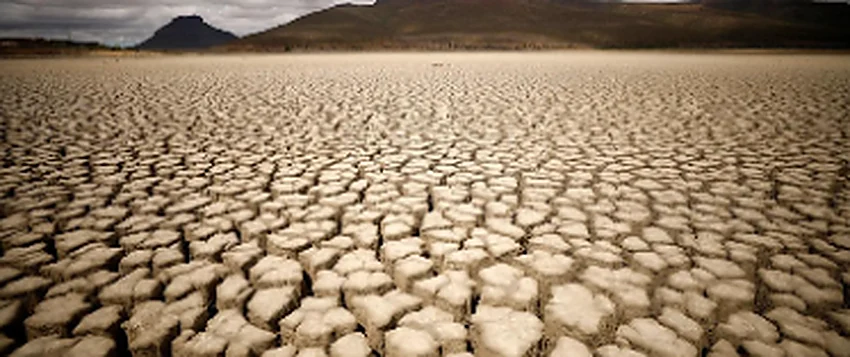
For example, prolonged drought can place additional pressure on water systems that already face infrastructure and maintenance challenges. Severe flooding can damage roads, housing and public facilities, particularly where drainage systems and settlement planning are inadequate.
Higher temperatures may also affect agricultural productivity, working conditions and energy demand.
These challenges highlight an important distinction between experiencing climate change and being prepared for it.
Although societies cannot eliminate every climate-related risk, effective planning can reduce exposure, improve response capacity and support long-term resilience.
South Africa’s climate crossroads therefore involves more than deciding how to reduce greenhouse gas emissions.
It also requires determining how the country will protect vulnerable communities, strengthen economic resilience and prepare infrastructure for future environmental conditions.
The decisions made today will influence how effectively the country manages the risks associated with continued global warming.
What Does a Climate Tipping Point Actually Mean?
The term climate tipping point is often used to describe a moment when environmental damage becomes irreversible.
However, its scientific meaning is more specific.
In climate science, a tipping point refers to a critical threshold beyond which a climate or environmental system may undergo substantial change, potentially driven by processes that reinforce further transformation.
Examples discussed in global climate research include major ice-sheet instability, changes in ocean circulation and large-scale ecosystem transitions.
Crossing such thresholds can have consequences that persist for extended periods, even if the original pressures are reduced.
However, it would be inaccurate to suggest that South Africa has one clearly defined national climate tipping point or that the country has already crossed a scientifically established point of no return.
The climate risks facing South Africa involve multiple interconnected systems, each with different vulnerabilities, adaptation possibilities and levels of scientific uncertainty.
Why the Point of No Return Matters for Leadership
Although the term has a specific scientific meaning, the idea of a point of no return raises an important leadership question.
How long can institutions delay responding to climate-related risks before the economic and social consequences become increasingly difficult to manage?
Consider a municipality that repeatedly repairs flood-damaged infrastructure without addressing underlying drainage weaknesses.
Similarly, a business that ignores changing water availability may eventually face substantial operational disruptions.
These situations do not necessarily represent scientific climate tipping points.
Instead, they demonstrate how delayed planning and inadequate investment can increase vulnerability and reduce the options available to future decision-makers.
The leadership challenge is therefore to recognise when postponing action creates greater long-term risks than investing in resilience today.
How Is Global Warming Affecting South Africa?
The effects of global warming in South Africa vary across regions because of differences in geography, rainfall patterns, infrastructure and economic activities.
Nevertheless, several major climate-related pressures are becoming increasingly important.
Rising Temperatures and Extreme Heat
The IPCC’s Sixth Assessment Report identifies increasing temperatures and heat extremes across southern Africa.
Higher temperatures can affect human health, water demand, agricultural conditions and labour productivity.
Outdoor workers in agriculture, construction and other physically demanding industries may face increased exposure to heat-related risks.
Businesses may also experience greater cooling requirements and operational challenges during extreme heat events.
These changes require leaders to reconsider workplace safety, building design and infrastructure planning.
Changing Rainfall Patterns and Water Scarcity
Water security is one of South Africa’s most important long-term development concerns.
Climate change can influence rainfall variability, evaporation rates and the reliability of available water resources.
These pressures affect households, agriculture, manufacturing, energy generation and public services.
However, climate change is not the only cause of water insecurity.
Ageing infrastructure, pollution, inefficient water use and inadequate maintenance can also affect reliable access to water.
Effective climate change adaptation in South Africa must therefore combine environmental planning with improved water governance and infrastructure management.
Flooding and Infrastructure Damage
Heavy rainfall and flooding can cause extensive damage to roads, bridges, homes and essential services.
The devastating KwaZulu-Natal floods in 2022 demonstrated how severe weather can disrupt communities, economic activity and critical infrastructure.
Although individual disasters should not automatically be attributed entirely to climate change, a warming climate can influence the likelihood or intensity of certain extreme weather events.
Infrastructure designed for historical conditions may become increasingly vulnerable as environmental risks evolve.
This makes climate-resilient infrastructure planning an important responsibility for both public institutions and private investors.

The Economic Impact of Climate Change in South Africa
Climate change is not simply an environmental problem. It is increasingly relevant to South Africa’s economic future.
The World Bank’s South Africa Country Climate and Development Report connects climate resilience with economic development, infrastructure investment and inclusive growth.
Climate-related disruptions can affect business operations, agricultural output, insurance costs, employment and public expenditure.
For businesses, extreme weather can disrupt supply chains, damage assets and increase operational uncertainty.
For government, repeated disaster responses and infrastructure repairs can place additional pressure on limited financial resources.
These consequences become particularly significant when economic growth is constrained and development needs remain substantial.
Agriculture and Food Security
Climate change and agriculture in South Africa are closely connected because agricultural production depends on suitable temperatures, water availability and reliable growing conditions.
Higher temperatures, prolonged drought and changing rainfall patterns can affect crop yields, livestock productivity and farming costs.
These effects can extend into food processing, transportation, retail and household food prices.
Climate-smart agriculture, improved water management, suitable crop selection and more effective forecasting can support adaptation.
However, smaller producers may face financial and technical barriers when adopting these approaches.
Leadership must therefore consider how adaptation resources and support can reach agricultural communities with different levels of capacity.

Business Continuity and Investment
Businesses increasingly need to evaluate how climate-related risks could affect their operations.
Potential exposures include water shortages, heat-related productivity losses, damaged infrastructure and transportation disruptions.
Climate risks may also influence decisions about where organisations develop facilities, expand operations and invest in long-term assets.
Companies that incorporate credible climate-risk assessments into their strategic planning may be better positioned to manage disruption and protect operational continuity.
Employment and Economic Inequality
Climate-related disruptions can have disproportionate consequences for communities with limited financial resources.
Households without adequate insurance, reliable infrastructure or financial reserves may struggle to recover from floods, droughts and other environmental shocks.
Workers in climate-sensitive industries may also experience changes in employment opportunities as organisations adapt.
A successful climate response must therefore connect environmental resilience with skills development, employment protection and inclusive economic opportunities.
Which South African Sectors Face the Greatest Climate Risks?
Climate-related risks vary across industries, making sector-specific planning essential.
The following table highlights important potential exposures and leadership priorities.
| Sector | Potential Climate Risks | Leadership Priorities |
|---|---|---|
| Agriculture | Heat, drought, changing rainfall and crop losses | Climate-smart farming and sustainable water management |
| Energy | Infrastructure exposure, water dependencies and transition pressures | Reliable, affordable and lower-emission energy systems |
| Water and Sanitation | Water scarcity, flooding and infrastructure stress | Conservation, maintenance and resilient infrastructure |
| Transport and Logistics | Damage to roads, rail networks and supply chains | Climate-resilient infrastructure planning |
| Healthcare | Extreme heat, disaster impacts and changing health risks | Public health preparedness and vulnerable-population protection |
| Tourism | Extreme weather, ecosystem degradation and seasonal disruption | Destination resilience and environmental protection |
| Finance and Insurance | Physical asset exposure and changing financial risks | Climate-risk assessment and responsible investment |
These risks demonstrate why South Africa cannot rely on a single climate response.
Effective adaptation requires coordinated national priorities supported by industry-specific strategies and locally appropriate interventions.
Why Climate Change Is Ultimately a Leadership Challenge
Climate change leadership extends beyond environmental awareness or the publication of sustainability policies.
It requires institutions to translate scientific evidence into practical decisions that protect people, resources and long-term economic interests.
For South Africa, leadership challenges arise when climate risks intersect with existing development needs.
Decision-makers must balance environmental responsibility with energy security, infrastructure investment, economic competitiveness and social wellbeing.
These decisions rarely produce simple solutions.
They require cooperation, ethical judgement, financial planning and the ability to evaluate competing priorities.
Strategic Planning
Climate resilience should become part of long-term organisational planning rather than an isolated environmental initiative.
Businesses and public institutions should consider how different climate scenarios could affect infrastructure, operations and financial sustainability.
Institutional Accountability
Climate commitments should be supported by measurable objectives, transparent reporting and clearly assigned responsibilities.
Without accountability, strategies may remain statements of intention rather than practical responses.
Collaboration Across Sectors
Water security, infrastructure resilience and energy development frequently cross organisational and geographic boundaries.
These challenges require cooperation between government, businesses, researchers, civil society and communities.
Skills and Leadership Development
Climate-related decision-making increasingly requires knowledge of environmental risk, economics, governance, technology and social development.
Educational institutions can contribute by developing professionals who possess critical thinking, analytical skills and the ability to make informed decisions under uncertainty.

South Africa’s Climate Change Act: From Policy to Implementation
South Africa has established an important legal framework for responding to climate change through the Climate Change Act 22 of 2024.
The Act seeks to support an effective national climate response and a long-term, just transition towards a low-carbon and climate-resilient economy and society.
It also establishes a framework for coordinating climate-related responsibilities across different spheres of government.
The legislation commenced partially on 17 March 2025, with certain provisions deferred to allow further regulatory development.
Readers can consult the official South African Climate Change Act for the legislative framework and commencement information.
However, legislation alone cannot guarantee climate resilience.
Effective implementation depends on institutional capability, financing, technical expertise, cooperation and ongoing monitoring.
For leaders, the central question is whether climate commitments can be translated into meaningful improvements in infrastructure, public services and long-term environmental management.
Why South Africa Needs a Just Climate Transition
Climate action in South Africa must account for the country’s economic structure and social realities.
The country has historically relied heavily on coal-based electricity generation and energy-intensive industries.
According to South Africa’s national greenhouse gas inventory published in November 2026, the energy sector accounted for approximately 78.7% of national greenhouse gas emissions in 2024, excluding land use, land-use change and forestry.
This highlights the importance of the energy sector in national climate mitigation efforts.
At the same time, energy remains essential for industrial activity, economic development and household wellbeing.
A just climate transition seeks to manage the shift towards a lower-carbon economy while considering workers, communities, livelihoods and unequal access to economic opportunities.
For decision-makers, this involves several important questions:
- How can cleaner energy investment support reliable electricity supply?
- What support will workers and communities need as industries change?
- How can emerging green industries create opportunities for young people?
- How can households and small businesses participate in the transition?
- What investments are necessary to prevent vulnerable communities from bearing disproportionate costs?
The World Bank’s assessment of South Africa’s climate and development priorities highlights the importance of integrating a low-carbon transition with resilience and inclusive economic growth.
Further analysis is available in the World Bank’s assessment of South Africa’s climate and development goals.
The leadership challenge is not simply to reduce greenhouse gas emissions. It is to develop a transition that supports environmental sustainability while recognising the country’s broader development needs.
What Should South African Leaders Do Before Climate Risks Intensify?
Responding to climate change requires more than recognising the problem.
Leaders need practical strategies that connect climate-related evidence with institutional decisions.
1. Assess Climate Exposure
Organisations should identify how extreme weather, water insecurity, energy dependencies and other climate-related risks could affect their operations.
Assessments should consider both immediate vulnerabilities and longer-term scenarios.
2. Invest in Resilient Infrastructure
Infrastructure investment should account for expected changes in environmental conditions over the useful life of an asset.
Improved maintenance, drainage systems, building standards and infrastructure protection can form part of this response.
3. Strengthen Water and Energy Security
Water conservation, reliable electricity infrastructure and improved resource efficiency can help organisations manage critical dependencies.
Appropriate energy diversification strategies may also support long-term resilience.
4. Develop Climate-Related Skills
Professionals need the ability to interpret climate information, evaluate uncertainty and incorporate environmental considerations into planning.
Relevant capabilities include risk assessment, data analysis, financial planning and sustainability governance.
5. Protect Vulnerable Communities
Adaptation strategies should consider people with limited access to financial resources, reliable infrastructure and essential services.
Community participation can improve understanding of local risks and support more appropriate interventions.
6. Establish Measurable Outcomes
Leaders should define clear responsibilities, implementation milestones and performance indicators.
Progress must be evaluated through practical outcomes rather than commitments alone.
A Practical Climate Leadership Framework for South African Organisations
Organisations can apply a structured approach to strengthen resilience and improve decision-making.
| Leadership Stage | Key Question | Practical Action |
|---|---|---|
| Understand | What climate risks affect us? | Conduct a climate-risk assessment |
| Prioritise | Which risks require immediate attention? | Evaluate risks by likelihood, impact and vulnerability |
| Plan | How should our strategy change? | Integrate climate adaptation into budgets and operations |
| Implement | Who is responsible for action? | Assign ownership and fund appropriate interventions |
| Measure | Are our actions reducing risk? | Monitor indicators and review performance |
| Improve | What needs to change? | Update plans as evidence and circumstances evolve |
This framework can support corporate organisations, municipalities, educational institutions and other organisations responsible for long-term planning.
Its central value is connecting climate awareness with governance, implementation and continuous improvement.
The Role of Education and Future Leaders in South Africa’s Climate Response
South Africa’s response to climate change will depend partly on the capabilities of future business leaders, policymakers, researchers and professionals.
Climate-related decisions increasingly require knowledge across several disciplines, including economics, technology, public management, environmental science and organisational leadership.
Educational institutions can contribute by developing critical thinking, analytical ability, ethical judgement and long-term strategic planning.
These capabilities are particularly important because climate-related challenges rarely have simple solutions.
For example, an energy decision may require balancing affordability, reliability, environmental performance and employment.
A water-management decision may involve infrastructure, environmental conditions, municipal capacity and community needs.
Future leaders must therefore be equipped to evaluate competing priorities rather than approaching environmental challenges in isolation.
The next generation of climate leadership will be shaped not only by technological innovation, but also by the quality of decisions made by those responsible for implementing it.
Conclusion: South Africa’s Point of No Return Is Also a Question of Leadership
South Africa stands at a climate crossroads where environmental risks, economic pressures and development challenges are becoming increasingly interconnected.
Rising temperatures, changing rainfall patterns, water insecurity and severe weather events are already creating important challenges for communities, businesses and public institutions.
Yet approaching a climate crossroads does not necessarily mean that the country has reached a scientifically established point of no return.
Climate science does not identify a single threshold beyond which South Africa as a whole becomes incapable of recovery or adaptation.
Instead, the country’s future will depend partly on the extent of global warming, the effectiveness of mitigation efforts and the decisions made to strengthen resilience.
This distinction matters because suggesting that the future is already beyond repair can discourage the very actions needed to manage climate risks.
The more meaningful question is whether South Africa’s leaders are responding with the urgency, coordination and long-term perspective required by the challenges ahead.
Effective leadership means recognising that climate change cannot be addressed through isolated environmental policies or short-term commitments.
It requires responsible investment, resilient infrastructure, inclusive economic planning, institutional accountability and the development of future-ready skills.
Businesses must consider how environmental risks affect their operations. Public institutions must strengthen preparedness and infrastructure. Educational institutions must equip future leaders with the knowledge and judgement required to navigate increasingly complex challenges.
South Africa’s climate future is not determined by one decision or one institution. It will be shaped by the combined effects of scientific developments, international action and choices made across society.
The critical question is not simply whether South Africa is approaching a point of no return. It is whether today’s leaders will act early enough to preserve more options, protect vulnerable communities and build a more resilient future.