
Modern classrooms demand that teachers connect with learners and guide them towards their full potential. Teachers will well-developed skills are better positioned to manage diverse classrooms and respond appropriately to students.
This, in turn, helps to build a positive student-teacher relationship, which can improve behaviour and motivation in the classroom. Teachers learn these skills in accredited Bachelor of Education programmes and develop them with experience.
In this article, we will explore the various teaching skills for teachers and how they help improve learning.
What are Teaching Skills for Teachers?
Teaching skills refer to the abilities educators use to deliver lessons, engage learners, and manage the classroom effectively. While subject knowledge is one of the most important skills, teachers require a blend of interpersonal and emotional skills.
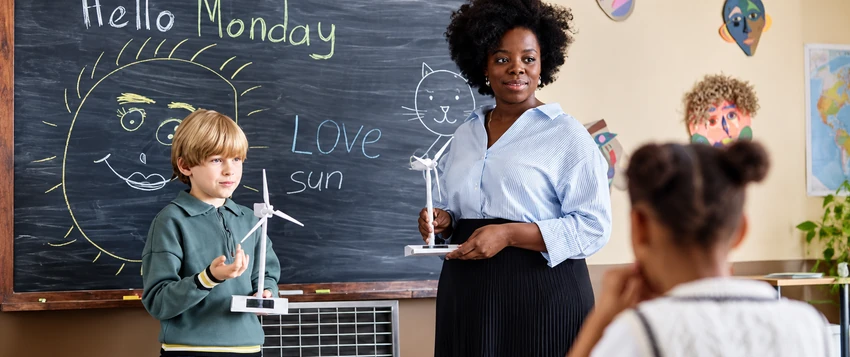
In modern classrooms, teaching skills combine traditional methods with newer approaches, such as interactive learning and the use of technology. This can help them create interactive learning experiences in which students understand a topic more visually.
Strong teaching skills help improve learner understanding, participation, and overall academic performance. Aspiring teachers can begin to develop these skills when they enrol in the CHE-accredited Regenesys Bachelor of Education in Senior Phase and Further Education and Training.
Our programme includes mandatory Work-Integrated Learning (WIL), where students participate in teaching exercises in real classrooms. They observe teachers in practice and work under their supervision to build important skills.

Skill 1: Subject Knowledge
Subject knowledge is the foundation of effective teaching. Teachers must have a clear and thorough understanding of the topics they teach. This allows them to explain concepts accurately and answer learner questions with confidence.
In the Regenesys programme, students can choose to specialise in Science and Technology or Business and Management. Both are high-demand areas that help to meet national skill demand.
Strong subject knowledge helps teachers:
- Break down complex topics into simple parts
- Connect the topic with real-world examples
- Link multiple topics for an overall understanding
Read more on Top 7 Time Management Tips for Working Adults Pursuing a BEd Degree here
Skill 2: Classroom Management
Classroom management involves maintaining a structured and focused learning environment. This is an essential teaching skill for teachers since it creates a calm and supportive environment for learning.
A well-managed classroom allows teachers to focus on teaching while learners remain attentive and productive. To manage classrooms, teachers must set rules and follow them consistently. Effective classroom management includes:
- Addressing disruptive behaviour
- Keeping students engaged in activities
- Setting rules and expectations
Read more on From Classroom to Curriculum: Becoming an Education Specialist After BEd here

Skill 3: Communication
Aspiring teachers must be able to express ideas clearly, listen actively, and respond thoughtfully to students. Communication abilities directly influence subject understanding and classroom management.
This teaching skill includes both verbal and non-verbal communication. Good communication also builds trust and encourages learners to participate actively in the classroom.
Some examples of effective communication include:
- Verbal clarity and tone control while being culturally sensitive
- Positive body language to reinforce verbal messages
- Active listening to make students to feel heard
Skill 4: Leadership
Teachers play a leadership role in the classroom. They guide learners, set expectations, and create a positive learning culture. Strong leaders help to set a positive tone that results in structured and respectful classes.
Effective leadership skills allow teachers to also set the classroom culture and mould student behaviour. It allows them to resolve conflicts and classroom disruptions fairly.
Leadership remains one of the most important teaching skills for teachers because it helps in:
- Motivating learners in achieving their goals
- Creating a positive classroom environment
- Encouraging student participation and responsible behaviour
Read more on Teaching English in Multilingual Classrooms: What Regenesys BEd Students Learn? here

Skill 5: Adaptability and Empathy
Adaptability helps educators adjust their teaching methods. It also helps them change their communication styles. They can modify lesson content based on classroom needs.
Empathy helps teachers understand a student’s emotional challenges. It also helps them recognise social difficulties. This creates a more inclusive environment. It also supports a positive learning space.
Together, these emotional skills help to create inclusive classrooms. These help teachers:
- Adjust teaching methods when needed
- Build strong teacher-student relationships
- Be able to respond to a student’s emotions and challenges
How to Improve Teaching Skills?
Bachelor of Education programmes introduce students to these skills. However, actual skill development happens through practical experience in the classroom. The Regenesys Bachelor of Education in Senior Phase and Further Education and Training Teaching includes WIL within the curriculum.
In this component, student-teachers are placed in real school environments. They work under the guidance of experienced educators. This allows them to understand how classrooms function on a daily basis.
Teaching skills for teachers can be improved by:
- Seeking feedback from students and colleagues
- Attending training sessions or workshops
- Reflecting on their teaching methods regularly
- Improve communication through active interaction
- Observe experienced teachers in their classrooms
Read more on BEd with AI in South Africa – Training Future Teachers here

Conclusion
Classrooms require teachers to combine subject expertise with practical skills that support learner development. Teaching skills for teachers contribute to creating structured and inclusive learning environments.
Foundational knowledge of these skills can be gained through programmes such as the Regenesys Bachelor of Education in Senior Phase and Further Education and Training Teaching. However, consistent practice in real classroom settings is important, as it allows teachers to refine their approach.
Learn more about our accredited Bachelor of Education programme on the Regenesys Education website.
FAQs
What are teaching skills for teachers?
Teaching skills are the abilities educators use to plan lessons, deliver content, manage classrooms, and support learner understanding.
Why are teaching skills important in modern classrooms?
They help teachers manage diverse learners, maintain engagement, and improve overall learning outcomes.
How does classroom management impact learning?
It creates a structured environment where learners can focus, participate, and complete tasks without disruption.
What is Work-Integrated Learning (WIL) in teacher training?
It is a practical component that is part of the Regenesys programme. In this, student-teachers gain experience by working in real classroom environments under supervision.
Can teaching skills be developed without formal training?
Some skills can be developed through experience, but formal training provides structured knowledge and guided practice.