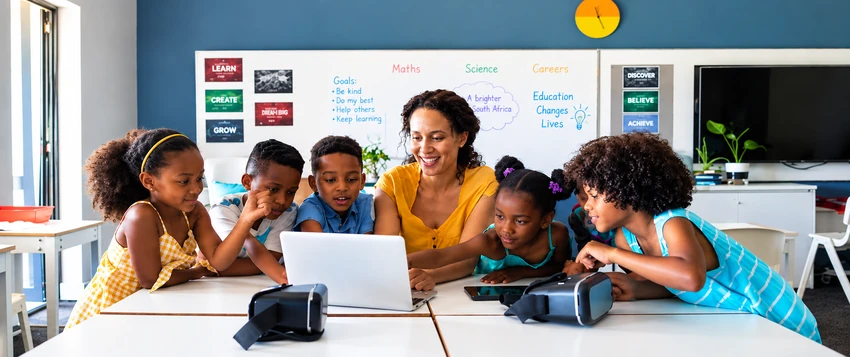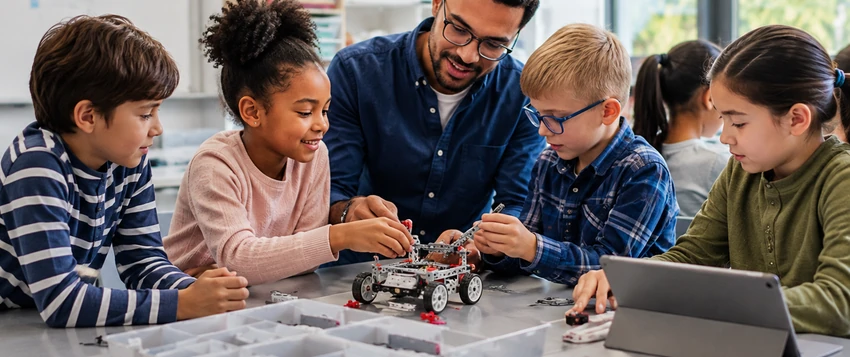

STEM education in South Africa is essential for preparing learners with the scientific, technological, engineering and mathematical skills needed for a changing economy. It can help young people develop critical thinking, practical problem-solving abilities and the confidence to pursue further study and careers in high-demand fields.
South Africa needs qualified teachers who can make mathematics, science and technology practical, engaging and relevant to learners. As schools prepare young people for a rapidly changing world, skilled educators are needed to strengthen subject knowledge, encourage critical thinking and help close persistent learning gaps.
The Regenesys Bachelor of Education in Senior Phase and Further Education and Training Teaching prepares aspiring teachers to teach learners from Grades 7 to 12. This four-year degree combines educational theory, specialised subject knowledge and supervised classroom experience, with study pathways in Science and Technology or Business and Management.
For students who want to build a meaningful teaching career, the programme provides the academic and practical preparation needed to support diverse learners, use effective teaching methods and contribute to the transformation of education in South Africa.
TABLE OF CONTENTS
Watch the Regenesys Masterclass
This article draws on insights shared during a recent Regenesys masterclass examining educational transformation, social justice, STEM development, curriculum reform and the role of teachers in shaping South Africa’s future.
During the masterclass, education and industry leaders discussed the continuing barriers affecting access, quality and inclusion in education. They also explored how STEM teaching, early childhood learning, African knowledge systems and stronger partnerships can support meaningful and lasting change.
Watch the full Regenesys masterclass below:
What Is STEM Education?
STEM education is an interdisciplinary approach to teaching Science, Technology, Engineering and Mathematics. Rather than treating these subjects as entirely separate areas, STEM learning encourages learners to apply knowledge across disciplines to solve practical problems.
For example, a classroom project may require learners to use mathematics to calculate measurements, science to understand materials, technology to research solutions and engineering principles to design a working model.
This type of learning can encourage:
- Critical and analytical thinking
- Problem-solving skills
- Creativity and innovation
- Digital and technological competence
- Teamwork and communication
- The practical application of classroom knowledge
These abilities can prepare learners for further education, emerging industries and workplaces that increasingly require technical and digital skills.
Why Is STEM Education Important in South Africa?
South Africa requires professionals with strong capabilities in mathematics, science, technology and related fields. Building these skills begins at school, where learners develop their understanding of scientific concepts, numerical reasoning and technology.
The importance of STEM education extends beyond preparing learners to become scientists or engineers. STEM skills are relevant to sectors such as healthcare, finance, agriculture, education, energy, infrastructure, manufacturing and information technology.
The South African Department of Basic Education has identified teacher subject knowledge, particularly in mathematics and science, as an important area for strengthening. The Department also recognises that teachers require both subject expertise and the ability to transfer that knowledge effectively to learners.
Read more about the national curriculum and its commitment to social transformation, inclusion and meaningful learning through the Department of Basic Education’s National Curriculum Statement.
Education Inequality and Access to STEM Subjects
Although STEM education creates opportunities, learners do not all enter the education system with the same resources or support. Education inequality in South Africa can affect whether learners have access to qualified teachers, laboratories, textbooks, reliable internet, digital devices and extracurricular learning opportunities.
Learners in under-resourced communities may formally take mathematics or science but still lack the practical experiences and teaching support needed to develop confidence in these subjects.
Access should therefore not only mean that a subject appears on a school timetable. Meaningful access means that learners receive quality teaching, relevant materials, suitable learning environments and opportunities to apply their knowledge.
The challenge is not limited to secondary school. Difficulties with reading, comprehension and basic numeracy during the early years can affect a learner’s ability to engage with more advanced mathematics and science later.
UNESCO’s work on foundational learning in South Africa highlights the importance of evidence-based action to improve school completion and foundational learning outcomes. Readers can explore the UNESCO Spotlight Report on South Africa for further context.
Why Foundational Learning Matters for STEM
A learner cannot easily interpret a science question, follow technical instructions or solve a complex mathematical problem without strong literacy and numeracy foundations.
For this reason, the future of STEM education begins before learners reach high school. Early childhood development, reading for meaning, vocabulary development and basic mathematical understanding all contribute to later academic progress.
Parents, caregivers, teachers, schools and community organisations each have a role to play. Reading with children, encouraging curiosity and helping learners connect classroom concepts to everyday experiences can create a stronger culture of learning.
Strengthening STEM outcomes therefore requires a long-term approach that supports learners throughout their educational journey.
The Role of Teachers in STEM Education
Teachers are central to the success of STEM education in South Africa. A well-prepared teacher does more than explain formulas or deliver information. Effective teachers help learners understand difficult concepts, ask meaningful questions and apply knowledge in practical contexts.
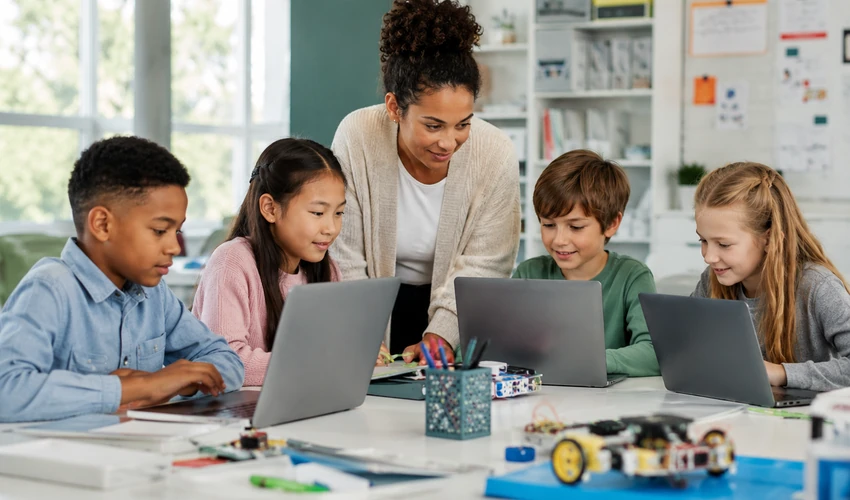
STEM teachers should be able to:
- Demonstrate strong subject knowledge
- Use appropriate teaching methods
- Connect theory with practical examples
- Identify and address learning barriers
- Use digital learning tools responsibly
- Create inclusive and engaging classrooms
- Assess whether learners genuinely understand the work
Teachers also influence how learners feel about mathematics and science. An educator who presents these subjects as understandable, relevant and achievable can help learners develop confidence and consider careers they may not previously have imagined.
Preparing the Next Generation of STEM Teachers
Improving STEM learning requires teachers who possess both specialised subject knowledge and professional teaching skills.
The Regenesys Bachelor of Education in Senior Phase and Further Education and Training Teaching prepares aspiring educators to teach learners in Grades 7 to 12.
The four-year, NQF Level 7 programme combines educational theory, subject knowledge and supervised school-based teaching practice. Students can specialise in Science and Technology or Business and Management, depending on their interests and intended teaching subjects.
Work-Integrated Learning gives students opportunities to apply lesson planning, classroom management, assessment and teaching methods in real school environments.
Prospective students can also learn more about the institution’s approach to teacher preparation through the Regenesys School of Education.
Curriculum Transformation and African Knowledge Systems
Education transformation is not only about improving access to existing knowledge. It also requires examining whose knowledge, experiences and identities are represented in the curriculum.
A transformed curriculum can recognise African knowledge systems while preparing learners to participate confidently in a connected global environment. Indigenous knowledge relating to agriculture, medicine, engineering, environmental management, astronomy and community life can help learners understand that scientific and technological knowledge has deep roots across the African continent.
This does not mean rejecting international knowledge or global standards. Instead, it involves creating a more inclusive curriculum in which learners can understand their history and identity while gaining skills that remain relevant across countries and industries.
STEM education can become more meaningful when examples, projects and case studies are connected to the communities in which learners live.
How Partnerships Can Improve STEM Education
Schools cannot address every educational challenge on their own. Stronger STEM outcomes require cooperation between educators, families, government departments, higher education institutions, businesses and community organisations.
Partnerships can support schools by providing:
- Teacher training and professional development
- Science equipment and practical learning materials
- Digital devices and internet access
- Mentorship and career guidance
- After-school STEM clubs
- Workplace exposure and industry insight
- Support for literacy and foundational learning
When qualified teachers, useful resources and community support work together, learners are more likely to participate confidently and achieve better outcomes.
How Can South Africa Build a Future-Ready Education System?
A future-ready education system must give learners the knowledge and adaptability required to respond to social, economic and technological change.
This requires sustained action rather than once-off projects. Schools need teachers who can deliver strong subject content, use effective teaching methods and respond to learners from different backgrounds.
South Africa can strengthen its education system by investing in teacher preparation, foundational learning, curriculum relevance, technology access and school-community partnerships.
Transformation should also be measured by practical outcomes. It should be visible in the quality of classroom teaching, learner participation, access to resources and the ability of young people to continue studying or enter meaningful careers.
Become Part of Education Transformation in South Africa
The future of education depends on people who are prepared to teach with knowledge, purpose and empathy. Qualified teachers can help learners understand complex subjects, develop confidence and recognise their own potential.
For individuals who are passionate about science, technology, business or youth development, teaching provides an opportunity to build a meaningful career while contributing to South Africa’s future.
Explore the Bachelor of Education in Senior Phase and FET Teaching and discover how professional teacher preparation can equip you to make a lasting contribution in the classroom.
Related Articles
- BEd Senior Phase and FET Modules and Career Paths
- How to Become a Senior Phase and FET Teacher in South Africa
Frequently Asked Questions
What is STEM education in South Africa?
STEM education in South Africa refers to the teaching and integrated application of Science, Technology, Engineering and Mathematics. It develops analytical, digital and problem-solving skills that learners can apply in further study, employment and everyday life.
Why is STEM education important for South African learners?
STEM education helps learners develop skills needed in sectors such as technology, healthcare, engineering, finance, agriculture and education. It can also support innovation, employability and economic development.
What are the main barriers to STEM education in South Africa?
Common barriers include unequal access to qualified teachers, laboratories, learning materials, digital devices, internet connectivity and foundational literacy and numeracy support.
How does education inequality affect STEM learning?
Education inequality affects the quality of teaching, resources and learning opportunities available to learners. A learner may take mathematics or science but still struggle if the school lacks suitable teachers, equipment or academic support.
Why are qualified STEM teachers important?
Qualified STEM teachers understand both their subjects and how to teach them. They help learners interpret difficult concepts, apply knowledge practically and build confidence in mathematics, science and technology.
What qualification is needed to become a high school teacher in South Africa?
One recognised route is a Bachelor of Education specialising in the Senior Phase and Further Education and Training phases. This qualification prepares graduates to teach selected subjects to learners in Grades 7 to 12.
What is the Senior Phase and FET phase?
The Senior Phase generally covers Grades 7 to 9, while the Further Education and Training phase covers Grades 10 to 12. Teachers in these phases normally specialise in particular school subjects.
Can I specialise in Science and Technology during a Bachelor of Education?
Yes. The Regenesys Bachelor of Education in Senior Phase and FET Teaching offers a Science and Technology specialisation for students interested in preparing to teach relevant subjects.
Does a Bachelor of Education include practical teaching experience?
Yes. The Regenesys Bachelor of Education includes supervised Work-Integrated Learning in schools. This allows students to practise lesson planning, teaching, assessment and classroom management.
How can teachers contribute to education transformation in South Africa?
Teachers contribute by delivering quality lessons, supporting diverse learners, promoting inclusive classrooms, connecting learning to real-life challenges and helping learners develop the skills needed for further education and work.