

The challenges faced by primary healthcare can affect whether people receive timely, affordable and appropriate care.
Primary healthcare is often the first point of contact between individuals and the health system. Clinics, community health centres, outreach teams and local health programmes help prevent illness, manage common conditions and refer patients who need specialised care.
However, healthcare-worker shortages, medicine stockouts, long waiting times, infrastructure problems and unequal access can make it difficult for facilities to meet community needs.
This article explains the main primary healthcare challenges in South Africa, how they affect patients and which practical measures can help strengthen service delivery.
Professionals seeking a stronger understanding of community-based healthcare can explore the Regenesys Primary Health Care Principles Short Learning Programme.
What is primary healthcare?
Primary healthcare is the first level of essential care available to individuals, families and communities.
Primary healthcare at a glance
Prevention
Immunisation, screening, health education and early risk identification.
Treatment
Care for common illnesses, minor injuries and ongoing health conditions.
Health promotion
Helping people make informed decisions that support healthier lives.
Referral
Connecting patients with hospitals or specialist services when necessary.
Community care
Bringing essential services and health information closer to communities.
Continuity
Supporting patients through follow-up care and long-term health management.
Why is primary healthcare important in South Africa?
Primary healthcare helps people access support before a health condition becomes more serious or requires hospital treatment.
It is especially important in communities where poverty, transport costs, unemployment and distance make accessing healthcare more difficult.
What are the main challenges faced by primary healthcare?
Primary healthcare challenges are connected. One problem can place additional pressure on staff, resources and patient services.
Unequal access
Not every community has the same access to facilities, professionals or services.
Healthcare-worker shortages
Too few workers can increase workloads and reduce the time available for each patient.
Medicine shortages
Stockouts may delay treatment or require patients to return later.
Long waiting times
High patient volumes and limited staff can result in lengthy queues.
Infrastructure problems
Facilities may face limited space, unreliable utilities or ageing equipment.
Weak referral systems
Patients may experience delays when moving between different levels of care.
Information gaps
Poor records and disconnected systems can affect continuity of care.
Social barriers
Poverty, stigma, transport and low health literacy may prevent people from seeking care.
How does unequal access affect primary healthcare?
Healthcare access is influenced by location, transport, affordability, service availability and the number of trained professionals in an area.
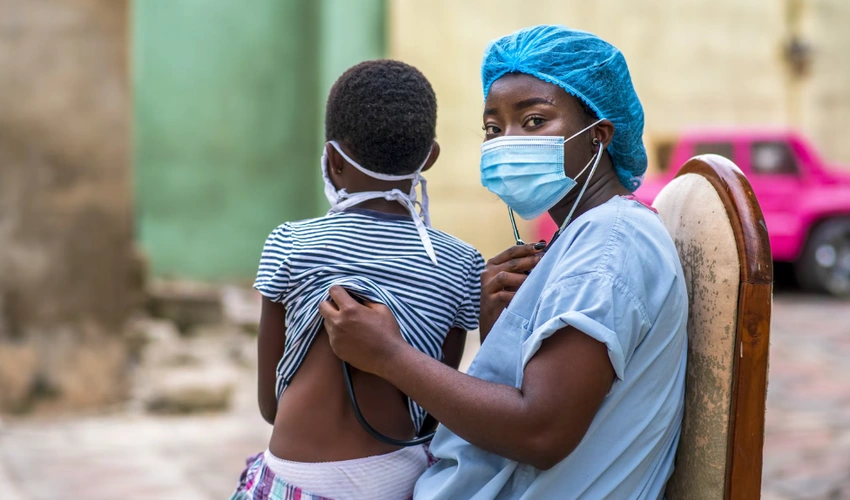
Communities with stronger access
- Shorter travel distances
- More healthcare professionals
- Wider service availability
- Better referral connections
- More reliable infrastructure
Communities facing access barriers
- Long and costly journeys
- Limited clinic operating capacity
- Fewer health professionals
- Restricted service options
- Delayed diagnosis and treatment
Why are rural communities often more affected?
Rural communities may have fewer facilities, longer travel distances and limited access to specialist care.
A possible rural patient journey
The patient may need to travel a long distance to reach a clinic.
Limited staffing may result in long queues.
The required medicine, test or professional may not be available.
The patient may need to travel again for further care.
Mobile services, community outreach and better referral coordination can help reduce some of these barriers.
How do healthcare-worker shortages affect service delivery?
Healthcare professionals are central to every primary-care service. When staffing is inadequate, the entire system may experience pressure.
Staff shortages may also affect outreach, health promotion, recordkeeping and follow-up care because urgent clinical duties receive priority.
How do medicine and equipment shortages affect patients?
Primary healthcare facilities need reliable access to essential medicines, diagnostic tools and basic equipment.
When essential supplies are unavailable
Additional visits may increase transport costs and time away from work.
A manageable condition may worsen while a patient waits.
Ongoing care may become inconsistent.
Workers must explain shortages and find suitable alternatives.
Strong stock-management systems, timely procurement and clear communication between facilities can support more reliable medicine availability.
Why are waiting times a primary healthcare challenge?
Long queues are often a visible sign of deeper challenges within a facility.
What can cause long waiting times?
- High patient volumes
- Staff shortages
- Manual administrative processes
- Limited consultation rooms
- Delayed patient files
- Poor appointment scheduling
- Unclear patient flow
- Equipment or system interruptions
Facilities can review patient flow, appointment systems, task allocation and record-management processes to identify where delays occur.
How do infrastructure problems affect clinics?
A safe and functional healthcare facility needs suitable space, sanitation, electricity, water, privacy and secure storage.
A functional clinic requires
✓ Clean water and reliable sanitation
✓ Electricity and suitable backup systems
✓ Private consultation areas
✓ Safe medicine and equipment storage
✓ Infection-prevention facilities
✓ Accessible entrances and waiting areas
✓ Working communication and information systems
When these basics are unreliable, healthcare workers may struggle to deliver safe, confidential and efficient care.
Why does community participation matter?
Primary healthcare works best when communities help identify local needs and participate in health initiatives.
Community participation can support
Community health workers, local organisations, schools and traditional or community leaders can help share information and improve trust between residents and healthcare services.
How do social and economic conditions affect health outcomes?
Health is influenced by more than access to a clinic. Living conditions also affect whether people remain healthy or recover successfully.
This is why primary healthcare often requires collaboration between health services, education, housing, sanitation, transport and social-development programmes.
What role can technology play in primary healthcare?
Technology can support healthcare delivery when it is affordable, reliable and appropriate for the setting.
Digital records
Improve access to patient information and continuity of care.
Appointment reminders
Help patients remember visits and treatment follow-ups.
Telehealth
Connect patients or local workers with distant healthcare professionals.
Stock monitoring
Help facilities track medicines and identify shortages earlier.
Mobile health education
Share prevention and treatment information with communities.
Data dashboards
Support planning by identifying service demands and health trends.
Technology is not a complete solution. Staff training, connectivity, privacy protection and technical support remain essential.
How can primary healthcare challenges be addressed?
Improving primary healthcare requires coordinated action rather than one isolated intervention.
Primary healthcare problems and practical responses
Who should study primary healthcare principles?
Primary healthcare knowledge can benefit professionals and students working in healthcare, public health and community programmes.
How should you choose a primary healthcare course?
A useful course should connect healthcare principles with real community and service-delivery challenges.
Course selection checklist
✓ Does it explain the role and structure of primary healthcare?
✓ Does it cover access, equity and community participation?
✓ Does it include disease prevention and health promotion?
✓ Does it discuss urban and rural healthcare differences?
✓ Does it address appropriate technology and collaboration?
✓ Is the study format suitable for working professionals?
✓ Are the admission and assessment requirements clear?
✓ Does successful completion include a certificate or recognised points?
Study Primary Health Care Principles at Regenesys
Understanding the challenges faced by primary healthcare can help professionals support more accessible, preventive and community-centred services.
The Regenesys Primary Health Care Principles Short Learning Programme provides a structured introduction to primary healthcare in South Africa.
Programme overview
3 days
Online
19 CEUs
5 CEUs
The programme explores:
It may suit public and private healthcare professionals, public-health practitioners, programme coordinators, NGO staff and students or graduates interested in community-based healthcare.
Applicants should review the programme curriculum, admission requirements, accreditation information and enrolment process before applying.
Final thoughts
The challenges faced by primary healthcare are not limited to clinics alone. Staffing, medicine supply, infrastructure, poverty, transport and community participation all influence health outcomes.
Addressing these barriers requires collaboration between healthcare workers, communities, government institutions and other social sectors.
With stronger systems, appropriate resources and informed professionals, primary healthcare can provide earlier support, reduce preventable illness and improve access to essential services.
Frequently Asked Questions
What are the main challenges faced by primary healthcare?
Common challenges include unequal access, healthcare-worker shortages, medicine stockouts, long waiting times, infrastructure gaps, weak referral systems and social barriers.
Why is primary healthcare important?
Primary healthcare provides prevention, basic treatment, health education and referral support close to where people live.
Why is access to primary healthcare unequal?
Access can differ because of location, transport, poverty, staffing, infrastructure and the availability of suitable services.
How do staff shortages affect clinics?
Staff shortages can increase workloads, extend waiting times and reduce the time available for consultations, outreach and follow-up care.
How can primary healthcare be improved?
Improvements may include better staffing, stronger supply systems, upgraded infrastructure, efficient patient flow, community involvement and better coordination between care levels.
Who can study primary healthcare principles?
Training may benefit healthcare professionals, community health workers, public-health staff, programme coordinators, NGO workers and health-sciences students.
Is the Regenesys Primary Health Care Principles programme online?
Yes. Regenesys currently offers the three-day Short Learning Programme through online study.
Does the programme award continuing education points?
Regenesys currently lists 19 clinical Continuing Education Units and five ethical Continuing Education Units for the programme.