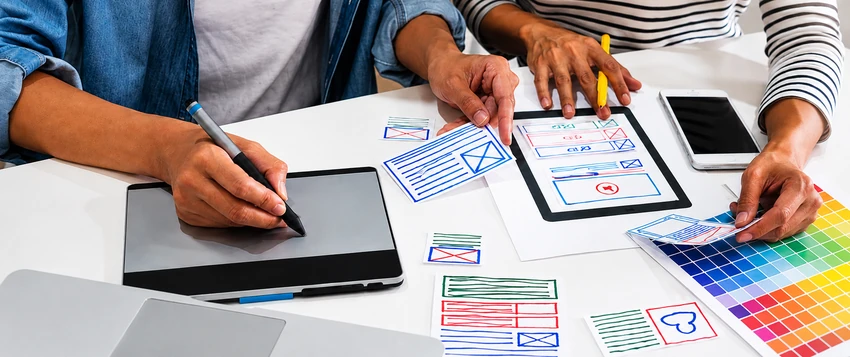

Digital products have become an essential part of everyday life, from mobile banking applications and e-commerce platforms to websites, games, and interactive learning environments. Behind these experiences are professionals who combine creativity, technology, and an understanding of user needs.
A Bachelor of Information Technology in Interactive Design can prepare students to work at the intersection of design and technology. For students interested in creative problem-solving and digital innovation, an Interactive Design degree can open pathways to a range of career opportunities.
This blog explores some of the top jobs you can pursue with an Interactive Design degree, the skills associated with these roles, and how the qualification can support long-term career development.
This article explores career opportunities available to graduates with an Interactive Design degree, including roles in UX design, UI design, digital product design, web design, front-end development, multimedia and user research. It explains what Interactive Design involves, the industries where these skills may be applied, and the practical, creative and technical capabilities that can support career development. It also highlights the importance of building a strong portfolio, understanding users, developing technical skills and continuing to learn as digital technologies evolve.
TABLE OF CONTENTS
What Can You Actually Do With an Interactive Design Degree?
A Bachelor of Information Technology in Interactive Design can prepare graduates for careers involving user experience, interface design, digital products, websites, multimedia, and emerging interactive technologies.
Rather than limiting graduates to a single career, Interactive Design develops a combination of creative, technical, research, and problem-solving skills that can be applied across various digital roles.
What Is Interactive Design?
Interactive Design focuses on creating digital products and experiences that respond effectively to how people interact with technology.
It considers more than how a product looks. Designers also consider how users navigate a digital environment, complete tasks, access information, and respond to interface elements.
Interactive Design may therefore involve:
- User Experience (UX) Design
- User Interface (UI) Design
- Web Design
- Digital Product Design
- Information Architecture
- Interaction Design
- Prototyping
- User Research
- Multimedia
- Front-End Technologies
A Bachelor of Information Technology in Interactive Design brings these areas together within a broader information technology framework.
Where Can Interactive Design Graduates Work?
Interactive Design skills can be relevant across many industries because organisations increasingly rely on digital products and services.
Graduates may find opportunities in:
- Technology companies
- Financial services
- E-commerce
- Education
- Media and entertainment
- Telecommunications
- Advertising agencies
- Digital marketing
- Software development companies
- Consulting
- Retail
- Government and public services
Some designers may also work independently as freelancers or consultants after developing appropriate experience and a professional portfolio.
What Skills Can Help You Build an Interactive Design Career?
Completing a qualification provides an important foundation, but employers may also consider the practical capabilities candidates demonstrate.
Build a Strong Portfolio
A portfolio allows prospective employers to see how you approach design problems.
Instead of displaying only finished designs, a strong portfolio can demonstrate the process behind the work, including:

- The original problem
- User research
- Initial ideas
- Wireframes
- Prototypes
- Testing
- Design decisions
- Final solution
Develop Technical Skills
Understanding the technologies behind digital products can help designers communicate effectively with developers.
Knowledge of web technologies, programming concepts, databases, and digital systems can therefore complement creative design abilities.
Understand Users
Successful digital experiences begin with understanding the people who will use them.

Developing skills in user research, accessibility, usability testing, and human-centred design can strengthen a graduate’s ability to create useful digital solutions.
Keep Learning
Digital design changes continuously.
Artificial intelligence, immersive technologies, new interface models, and changing user expectations mean designers need to continue learning throughout their careers.
What Is the Job Outlook for Digital Designers?
Digital design skills remain relevant as businesses expand their online offerings.
The U.S. Bureau of Labour Statistics groups web developers and digital designers and provides employment outlook information for these occupations. This provides a useful international indicator of how organisations continue to require professionals to develop and improve digital experiences.
Students should remember that employment conditions and salaries differ significantly between countries, industries, employers, experience levels, and individual roles.
Source: U.S. Bureau of Labour Statistics – Web Developers and Digital Designers
How Can a Bachelor of Information Technology in Interactive Design Prepare You?
A Bachelor of Information Technology in Interactive Design can provide more than software training.
University study can help students develop a combination of:
- Creative design capabilities
- Technical knowledge
- User-centred design principles
- Research skills
- Critical thinking
- Problem-solving
- Communication
- Project experience
- Teamwork
The combination of design and information technology can be particularly useful as digital products become increasingly sophisticated.
Frequently Asked Questions About Interactive Design Degrees in South Africa
What jobs can I get with a Bachelor of Information Technology in Interactive Design?
Potential career paths include UX Designer, UI Designer, Interaction Designer, Digital Product Designer, Web Designer, Front-End Developer, Multimedia Designer, Information Architect, UX Researcher, and Creative Technologist.
Can I become a UX Designer with an Interactive Design degree?
An Interactive Design degree can provide relevant foundations in user-centred design, research, prototyping, information architecture, and usability. Specific employer requirements and experience will vary.
Can Interactive Design graduates become Front-End Developers?
Graduates who develop strong skills in HTML, CSS, JavaScript, and related technologies may pursue front-end development opportunities. Additional technical learning may be necessary depending on the role.
Is Interactive Design only about designing websites?
No. Interactive Design can involve websites, mobile applications, digital products, multimedia, user interfaces, interactive systems, and emerging digital experiences.
Do I need a portfolio to find an Interactive Design job?
A portfolio can be particularly valuable because it demonstrates your design process, practical capabilities, problem-solving approach, and completed projects to prospective employers.
What skills are important for an Interactive Design career?
Useful skills include UX and UI design, user research, prototyping, visual communication, information architecture, problem-solving, collaboration, and an understanding of digital technologies.
What industries can Interactive Design graduates work in in South Africa?
Interactive Design skills can be applied across industries such as technology, financial services, e-commerce, education, telecommunications, digital marketing, retail, consulting, media, software development, and public services in South Africa.
Can I work as a freelance Interactive Designer in South Africa?
Yes. Interactive designers may eventually work independently as freelancers or consultants after building suitable experience, practical skills, and a professional portfolio. The type of freelance work available will depend on the designer’s capabilities and client requirements.
Are Interactive Design skills relevant to South African businesses?
Interactive Design skills can be relevant to South African organisations that use websites, applications, online platforms and other digital services. Businesses increasingly need professionals who can combine design, technology and an understanding of user needs to improve digital experiences.
What should South African students look for when choosing an Interactive Design degree?
Students should consider whether a programme develops both creative and technical capabilities. Useful areas to compare include UX and UI design, user research, prototyping, web technologies, information architecture, digital product design, multimedia, problem-solving and opportunities to build practical project experience.