

Digital health brings healthcare, technology and data together to improve how health information is collected, understood and used. For professionals considering digital health jobs, this creates career opportunities across healthcare delivery, health information, data, technology, research and programme management.
Building a career in digital health does not necessarily mean becoming a software developer or data scientist. Healthcare professionals, administrators, analysts, researchers and technology specialists can all contribute different expertise to digitally enabled healthcare systems.
The key is developing a combination of healthcare understanding, digital confidence, data literacy, communication and responsible decision-making.
TABLE OF CONTENTS
What Is Digital Health?
Digital health refers broadly to the use of digital technologies, information systems and data to support healthcare and health services.
Digital health also includes emerging applications such as virtual care and artificial intelligence. You can explore how AI is being used in telemedicine to understand how these technologies are influencing remote healthcare.
This can include areas such as:
- Electronic health records
- Telehealth and virtual care
- Health information systems
- Mobile health applications
- Remote patient monitoring
- Healthcare data analytics
- Artificial intelligence in healthcare
- Digital health programme management
The field is interdisciplinary. It brings together healthcare knowledge with technology, data, communication and systems thinking.
That means there is no single route into digital health. The best pathway depends on your existing background and the type of work you want to do.
Why Consider a Career in Digital Health?
Healthcare increasingly relies on digital systems to organise information, communicate with patients, monitor outcomes and support decision-making.
The World Health Organization identifies digital competencies as increasingly important for health workforces operating in more digitalised health systems. These competencies span areas including patient care, data and informatics, communication, technical proficiency, digital professionalism and administration.
South Africa has also recognised digital health as an important component of health-system development. The country’s digital health strategy has emphasised areas such as integrated health information systems, digital innovation, improved access and strengthening the digital health workforce.
This means professionals who understand both healthcare and digital systems can potentially contribute across clinical, administrative, technical and strategic environments.
What Digital Health Jobs Can You Explore?
Digital health jobs can exist in hospitals, clinics, healthcare organisations, health technology companies, government, NGOs, research institutions, consulting firms and organisations that manage health information.
Possible career directions include:
| Career Area | What the Work May Involve |
|---|---|
| Digital Health Coordinator | Supporting digital health projects, implementation and coordination across teams |
| Health Data Analyst | Working with healthcare data to identify patterns, trends and useful insights |
| Health Informatics Professional | Supporting the effective use of health information systems and clinical data |
| Digital Health Project Manager | Planning and coordinating technology-enabled healthcare projects |
| Telehealth Coordinator | Supporting virtual-care processes, technology and communication between patients and providers |
| Health Information Officer | Managing, organising and supporting appropriate use of health information |
| Digital Health Researcher | Studying how digital technologies influence healthcare access, delivery and outcomes |
| Health Technology Implementation Specialist | Helping healthcare organisations introduce and use digital platforms effectively |
These job titles are examples rather than guaranteed outcomes. Requirements differ by employer, and some positions require clinical registration, specialised technical qualifications or relevant work experience.
What Skills Do You Need for Digital Health Jobs?
Successful careers in digital health usually combine technical awareness with healthcare knowledge and strong interpersonal skills.
1. Digital Literacy
Digital literacy means being able to use technology confidently, critically and responsibly.
In healthcare, this may involve navigating digital systems, understanding how information moves between platforms and recognising the limitations of digital tools.
2. Data Literacy
Data literacy is the ability to understand, interpret and communicate information represented through data.
You do not always need to perform advanced statistical analysis. However, professionals should be able to understand what data shows, where it came from and whether it is reliable enough to support a decision.
3. Healthcare Knowledge
Technology needs to work within the realities of healthcare.
Understanding patient care, clinical workflows, healthcare administration or public health can help professionals determine whether a digital solution actually addresses a meaningful healthcare need.
4. Communication
Digital health professionals often work between different groups, including healthcare providers, administrators, technology teams, patients and managers.
Being able to explain technical information clearly to non-technical audiences can therefore be extremely valuable.
5. Critical Thinking
Digital systems can provide information, but people still need to determine what that information means.
Critical thinking helps professionals assess evidence, recognise limitations and make informed decisions rather than simply accepting every digital output.
6. Privacy and Ethical Awareness
Healthcare data can contain highly sensitive personal information.
Professionals working in digital health should therefore understand the importance of privacy, confidentiality, responsible data use and ethical decision-making.
7. Adaptability
Digital health evolves quickly. Specific platforms and tools may change over time.
Developing strong foundational skills can therefore be more valuable than learning only one technology.
Why Healthcare Data Analytics Matters
Healthcare data analytics involves examining health-related information to identify patterns, measure outcomes and support better decisions.
Healthcare organisations generate information through patient records, clinical systems, administrative platforms, public-health programmes and other digital tools.
Analytics can help professionals answer questions such as:
- Are patients receiving services efficiently?
- Which health problems are appearing most frequently?
- Where might healthcare resources be needed?
- Are programmes achieving their intended outcomes?
- Which patterns require further investigation?
Data should not replace professional judgement. Instead, it can provide evidence that helps healthcare professionals understand situations more clearly.
Healthcare data often comes from digital systems such as electronic health records, which help organisations capture and manage patient information. You can learn more about the benefits of electronic health records and their role in modern healthcare systems.
What Is Digital Health Data Literacy?
Digital health data literacy sits at the intersection of three areas: health knowledge, digital capability and data understanding.
For healthcare professionals, this could mean being able to access digital information, understand health data, judge whether information is trustworthy and use digital systems responsibly.
The importance of these competencies is increasing as healthcare systems adopt technologies such as electronic health records, telemedicine, connected devices and artificial intelligence.
The World Health Organization’s current work on digital health competencies highlights areas including data, informatics, communication, technical proficiency and digital professionalism as important components of a digitally capable health workforce.
Do You Need a Medical Background to Work in Digital Health?
Not every digital health role requires a clinical qualification.
The field draws people from different backgrounds, including:
- Healthcare
- Nursing
- Public health
- Health administration
- Information technology
- Data and analytics
- Project management
- Research
- Business and consulting
However, the requirements depend on the role.
A position involving direct clinical care may require professional registration, while a health data or project role may prioritise analytical, technical or management experience.
What matters is understanding how your existing expertise can connect to healthcare’s digital transformation.
How Can Healthcare Professionals Move Into Digital Health?
If you already work in healthcare, you may not need to start your career again from the beginning.
Your existing knowledge of patient care, health systems, administration or clinical workflows can provide an important foundation.
You can then add digital capabilities by:
- Building digital literacy: Become comfortable with common digital health systems and technologies.
- Developing data literacy: Learn how to read and interpret healthcare data.
- Understanding digital healthcare: Explore telehealth, electronic health records, health information systems and emerging technologies.
- Learning about privacy and ethics: Understand the responsibilities associated with digital health information.
- Getting practical exposure: Participate in digital projects, implementation teams or health-data initiatives where possible.
- Building interdisciplinary communication: Learn to work effectively with both health and technology professionals.
How Can Technology Professionals Move Into Digital Health?
Technology professionals may already have strong technical skills but need a better understanding of healthcare environments.
A developer, analyst or IT professional entering health technology should learn how healthcare workflows, patient privacy, clinical decisions and healthcare regulations affect the design and use of digital systems.
Technology that works well technically may still fail if it does not fit the needs of healthcare workers or patients.
This is why digital health requires collaboration between technical and healthcare professionals rather than one group working in isolation.
How to Build a Career in Digital Health Step by Step
There is no single route into the field, but the following framework can help you plan your development:
| Step | What to Focus On |
|---|---|
| 1. Identify your starting point | Decide whether your strongest background is healthcare, technology, data, research or management |
| 2. Learn digital health fundamentals | Understand how technology, healthcare and information systems connect |
| 3. Build data literacy | Learn to interpret, question and communicate health-related data |
| 4. Develop practical digital skills | Gain experience using relevant tools, systems or platforms |
| 5. Understand ethics and privacy | Learn why responsible data handling is essential in healthcare |
| 6. Gain practical experience | Look for projects, workplace responsibilities or learning opportunities involving digital healthcare |
| 7. Continue learning | Keep developing as technologies and healthcare practices evolve |
How Can a Digital Health Course Help?
A digital health course can provide a structured introduction for professionals who want to understand how healthcare, digital systems and data connect.
Structured learning can be particularly useful if you have strong healthcare experience but limited exposure to digital systems, or if you have technology experience and want to better understand healthcare applications.
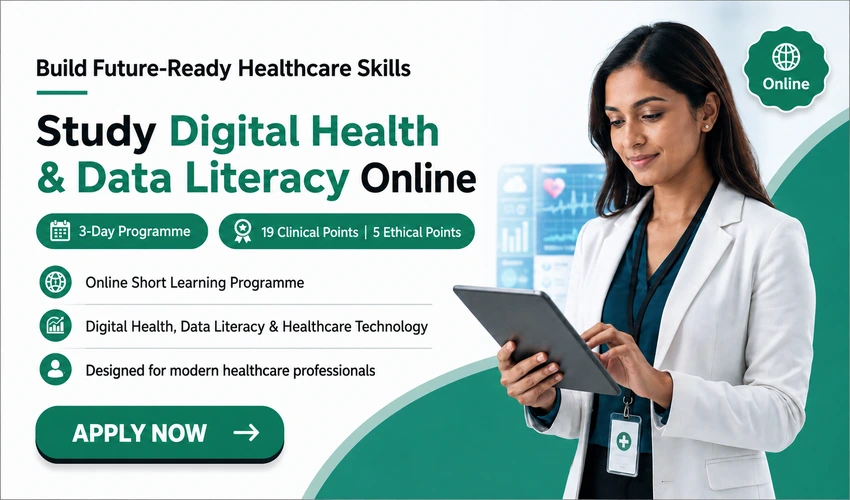
Regenesys offers a Digital Health & Data Literacy Short Learning Programme through its School of Health Sciences.
The programme is currently structured as a three-day online Short Learning Programme and carries 19 Clinical Points and 5 Ethical Points.
You can explore the Regenesys School of Health Sciences to learn more about Digital Health & Data Literacy and other health-focused learning options.
Digital Health & Data Literacy Programme at a Glance
| Programme Detail | Digital Health & Data Literacy |
|---|---|
| Programme type | Short Learning Programme |
| Duration | 3 days |
| Study mode | Online |
| Clinical Points | 19 |
| Ethical Points | 5 |
Why Digital Health Skills Matter Beyond Technology
Digital health is ultimately about healthcare, not technology for its own sake.
A successful digital health solution needs to be useful, understandable, ethical and appropriate for the people who use it.
Healthcare professionals therefore need to understand technology, while technology professionals need to understand healthcare needs.
This combination of digital confidence, health knowledge and data literacy can help professionals contribute more effectively as healthcare systems continue to evolve.
Build Digital Health and Data Literacy Skills at Regenesys
A career in digital health can begin from many different starting points. You may already be a healthcare professional who wants to become more confident with digital systems, or you may have experience in technology, data or management and want to understand how those skills can be applied to healthcare.
The Digital Health & Data Literacy programme at Regenesys provides a short, structured learning opportunity for people who want to strengthen their understanding of digital healthcare and data.
The most effective career strategy is to build on the expertise you already have while developing the digital, data and healthcare knowledge needed for the type of role you want to pursue.
Frequently Asked Questions About Digital Health Careers
What is digital health?
Digital health is the use of technology, digital systems and data to support healthcare delivery, health information, communication and decision-making.
What jobs are available in digital health?
Digital health jobs may include roles in health informatics, health data analysis, digital health project management, telehealth coordination, health information management, research and technology implementation. Requirements vary by employer.
Do I need to be a doctor or nurse to work in digital health?
No. Some digital health roles require clinical qualifications, but others are suited to professionals from technology, data, research, administration, public health, project management and related backgrounds.
What skills are important for digital health jobs?
Useful digital health skills include digital literacy, data literacy, communication, critical thinking, healthcare knowledge, privacy awareness and the ability to work across multidisciplinary teams.
What is healthcare data analytics?
Healthcare data analytics involves examining health-related information to identify patterns, measure performance and support evidence-informed healthcare decisions.
Is data literacy important in healthcare?
Yes. Data literacy helps professionals understand where health information comes from, interpret results, recognise limitations and communicate findings appropriately.
How can a healthcare professional move into digital health?
Healthcare professionals can build on their clinical or health-system knowledge by developing digital literacy, data skills, knowledge of digital health technologies and practical experience with digital projects.
Can an IT professional work in digital health?
Yes. IT professionals can contribute to digital health, particularly when they develop an understanding of healthcare workflows, data privacy, patient needs and health-system requirements.
Is digital health the same as health informatics?
No. Health informatics is an important part of digital health, but digital health is broader and may also include telehealth, mobile health, digital platforms, connected devices, artificial intelligence and other technology-enabled healthcare services.
How can I start building a career in digital health?
Begin by assessing your current healthcare, technical or analytical skills. Then build knowledge of digital health, develop data literacy, gain practical exposure and pursue learning that addresses gaps relevant to your preferred career path.