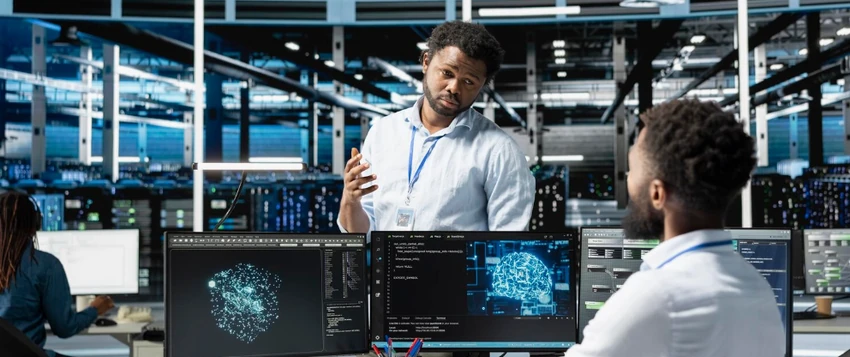

Artificial intelligence (AI) is changing how businesses operate, compete, and grow. One of its most practical applications is AI-powered automation. This allows organisations to streamline processes, reduce manual effort, and make better use of data.
As AI systems become more affordable and accessible, it is now possible for small and medium businesses (SMBs) to integrate them in the workplace. These tools allow SMBs to function more efficiently while controlling costs and quality.
In this article, we will learn how AI-powered automation is helping SMBs and the best tools for their needs.
Table of Contents
What is AI-Powered Automation?
AI-powered automation refers to the use of artificial intelligence technologies to perform tasks that traditionally required human skills. AI automation can learn from data, adapt to new situations, and improve over time. This is how it differs from traditional automation.
The goal of AI automation in business is not to replace people, but to reduce manual workloads. This allows teams to focus on higher-value activities. For SMBs, AI-powered automation enables more efficient operations without hiring additional employees. While this might mean a one-time spend, SMBs see a return on investment within 12-30 months.
How AI Automation Works: Core Technologies
AI-powered automation operates through a combination of technologies. Together, they allow systems to process data and complete tasks with minimal human input. This allows SMBs to shift from rule-based automation to systems that learn and improve over time.
AI technologies integrate with existing automation systems, allowing machines to think and process information on their own.
The main AI automation technologies are :
- Machine Learning: It helps to analyse data, identify patterns, and improve performance over time without manual reprogramming.
- Computer Vision: It allows systems to interpret images, scanned documents, and video content.
- Natural Language Processing: It allows automation to interpret and respond to human communication. This can include email, messaging, and documents.
- Generative AI: This creates text, reports, code, and responses for content and conversational automation.
Types of AI-Powered Automation for Businesses
This type of automation is used across a wide range of business functions. However, its usage is determined by operational priorities. Organisations often apply automation to improve internal efficiency and to support data-backed decision-making.
The main types of AI-automation for businesses are:
Workflow Automation
This is focused on streamlining internal processes and approvals across departments. AI-supported workflows automatically route tasks, monitor progress, and flag exceptions. This helps to reduce delays and administrative effort.
Customer Facing Automation
This supports customer interactions through tools such as chatbots and virtual assistants. These help SMBs manage basic requests and operate continuously. Over time, they improve service delivery and response times.
Data Automation
This helps to handle data collection, cleaning, and reporting. AI can help to automate routine data tasks. At the same time, it ensures that information is accurate and ready for use. This can help save time in manually collecting and preparing data.
Predictive Analytics
This uses historical and real-time data to forecast trends. AI-driven models can forecast demand and help allocate resources accordingly. This helps SMBs respond proactively to changing market conditions.
Document Processing
This feature helps to automate documents such as invoices, contracts, and forms. It helps to reduce manual entry and shorten processing time. It also helps to improve accuracy for document-heavy businesses.
Read more on AI and Automation in Business – BBA Career Opportunities here
Benefits of AI-Powered Automation for SMBs
AI automation in business helps SMBs to reduce manual workload and improve consistency. It allows them to manage growth without hiring more staff.
At the same time, it also helps companies make more strategic decisions. It also allows SMBs to respond faster to change while maintaining quality. Some additional benefits are:
- Cost Savings
- Efficiency Improvements
- Improved Customer Experience
- Reduction in errors
- Ability to scale
Read more on Benefits of Artificial Intelligence in Business | Know More! here

Common Challenges and Limitations of AI Automation
While there are clear advantages of adopting AI automation for businesses, they are likely to face some challenges. Being aware of these challenges allows SMBs to plan more effectively.
With proper planning, AI automation can deliver expected results. The Regenesys School of Artificial Intelligence offers a range of corporate education programmes. These can help SMBs be better prepared forAI automation in the workplace.
Some challenges that businesses can face are:
- High initial costs
- Skills and knowledge gap
- Resistance to change
- Lack of available or complete data
- Maintenance requirements
- Difficulty in integrating with current systems
Read more on The Age of Intelligence: Exploring South Africa’s New AI School here
How SMBs Can Implement AI Automation Successfully
Successful AI automation starts with clear business objectives and realistic expectations. SMBs should identify specific processes that consume time and assess how automation can lead to improvement.
Starting small helps to reduce risk and allows for smoother adoption. These are some ways in which SMBs can implement AI automation:
- Define objectives
- Start small and build gradually
- Prepare accessible and structured data
- Invest in training
- Choose scalable tools
- Monitor performance regularly
Read more on Top 10 Key Roles of Artificial Intelligence in Business Education here
AI Tools and Platforms for Small and Medium Businesses
AI tools for SMBs are designed to be scalable and easier to implement than enterprise models. They combine automation and analytics with easy to use interface. This makes it easier for businesses to adopt and reduces training costs.
Some popular tools for SMBs include:
- Zapier to automate workflows by connecting multiple apps
- Zoho to manage CRM, finance, and business operations
- Jasper to generate marketing and content copy
- Pictory to convert written content into short videos
- QuickBooks to automate accounting
- Salesforce to manage customer relationships and analytics
- Hootsuite to schedule and monitor social media activity across platforms
- Tabnine to assist in coding and programming
- Asana to automate task management and team workflows
- Tableau to analyse data and create visually appealing reports
Future Trends in AI-Powered Automation for SMBs
As AI automation tools continue to evolve, the focus will be on flexible, user-friendly tools. This will make it easier for SMBs to automate without hiring specialists.
In the coming years, AI automation is expected to become embedded in standard systems. This will allow SMBs to adopt intelligent automation as part of standard operations.
Some trends that we can expect to see in this field include:
- Small Language Models
- Responsible AI
- Protection Against AI Threats
- Personalisation that converts to sales
- Greater Integration
- More Affordable AI Solutions

Explore Our Other Programmes
Conclusion
AI-powered automation is no longer limited to large enterprises with extensive resources. As tools become more affordable and easier to use, SMBs can integrate them into daily operations.
When implemented with clear objectives and training, AI automation becomes a practical long-term investment. It can help companies scale operations and stay competitive in a global economy.
If you are thinking of integrating AI automation into your workplace, visit Regenesys Education to learn more about our programmes.
FAQs
What is AI-powered automation in business?
It refers to the use of AI to perform tasks that usually require human input. These can include analytics, accounting, and customer service.
Is AI-powered automation suitable for small businesses?
Yes, many tools are now designed to be affordable and flexible for small business. They also allow companies to scale as they grow.
Does AI automation replace human employees?
No, it is meant to reduce manual and repetitive tasks. This allows employees to focus on higher-value and strategic activities.
What are the main challenges of adopting AI automation?
Some common challenges include initial cost, resistance to change, and lack of knowledge.
What is the future of AI-powered automation for SMBs?
In the future, AI automation is expected to become more affordable. It is possible for it to come integrated, allowing businesses to make it part of their daily operations from the beginning.