
Bursaries are essential in helping students gain access to higher education and skills development. Many students in South Africa cannot afford the costs of higher education, including tuition fees, accommodation, and study materials.
Table of Contents
Facing financial barriers is tough for students. Bursaries provide financial assistance to such students and help them achieve their career goals. In this article, you can learn what a bursary is and understand the difference between a scholarship and a bursary.

What is a Bursary?
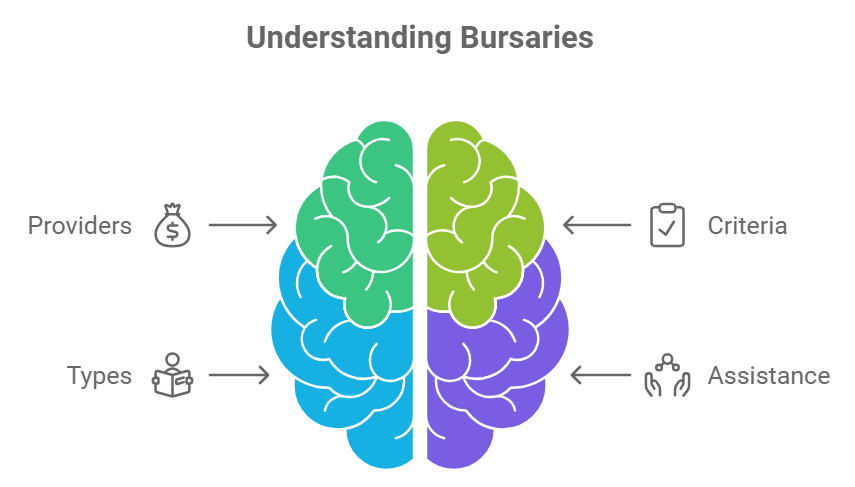
A bursary is a type of financial aid provided to certain individuals based on specific criteria to help them cover the cost of their education. The bursary definition in South Africa is basically a financial aid which is also available for working employees based on different criteria. Bursaries can take various forms, depending on the provider. Candidates can also explore programme-based, field-based, and other types of programmes.
To know more about it, you must also know that these are generously provided by different companies, private donors, NGOs or government funding. Bursaries in South Africa have distinct criteria and processes that candidates must meet to pursue further education.
The goal of a bursaries are to aid students and relieve any financial burden they face during their studies. Academic advisors in the financial aid departments of universities and other educational institutions can assist prospective candidates in securing appropriate bursaries in South Africa.
How to Apply for a Bursary?
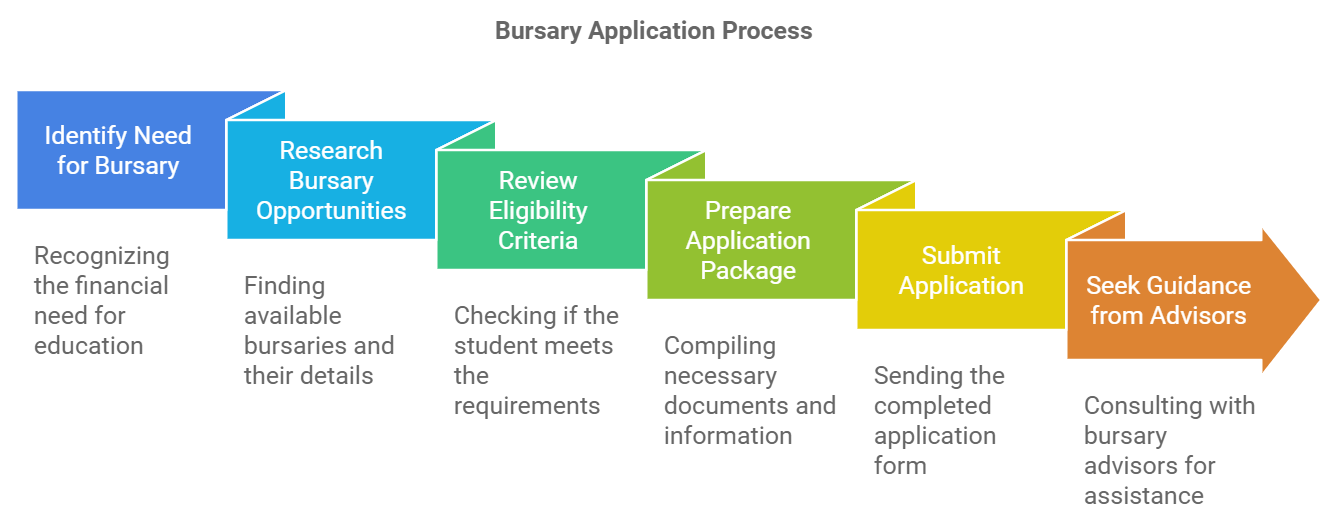
To apply online or offline, you need proper information about the process, the application form, and more. They play a crucial role in promoting access to education and ensuring that financial constraints do not prevent deserving students from realising their academic potential.
People’s question on what is a bursary typically shows that the need for bursaries is quite high in South Africa. Socioeconomic disparities remain a significant challenge. They serve as lifelines for candidates in need, enabling them to pursue their dreams without the burden of crippling debt.
These financial aid opportunities empower individuals and help develop a skilled workforce. Many organisations and institutions open their application windows as early as the preceding year. Prospective applicants can diligently research available opportunities, carefully review the eligibility criteria, and prepare comprehensive application packages tailored to the education programme.
Additionally, educational institutions often maintain dedicated bursary offices or advisors to guide students through the application process specific to their field of study or institution. Furthermore, you need to review the funding eligibility criteria.
What is the Eligibility Criteria for the funding bursary?
It’s important for individuals to learn how to apply for bursaries. Each bursary has different criteria depending on the organisation or company. Some of the common eligibility requirements are as follows:
- Candidate must be a South African Citizen (or South African permanent resident)
- Candidate must have a strong academic history
- Candidates must currently be studying a specific field that may be suitable for it.
- Candidates must have applied to or be studying at a recognised university in South Africa.
- Candidate must have Proof of financial need( income proof)
- They must complete the organisation’s checklist to confirm eligibility.
If you are successful, you will receive an offer letter outlining the terms and conditions. Read the terms carefully and either accept or decline the offer by the specified deadline. Lastly, always check the specific requirements and deadlines for each bursary you are applying for. Additionally, apply for multiple bursaries to increase your chances of securing funding.
Bursary Application Forms Key Elements
Application forms can vary depending on the organisation, NGO, or financial institution. Some of the elements in the application form are as follows:
| Application Section | Details Required |
| Personal Details | Accurate personal information, including full name, date of birth, contact details, and residential address. |
| Academic Records | Official transcripts or academic records from previous and current institutions demonstrating academic performance and achievements. |
| Financial Information | Detailed disclosure of financial circumstances, including family income, assets, existing debts, or loans, supported by documents such as payslips or bank statements. |
| Motivation Letter / Essay | A structured and well-written letter or essay outlining career goals, academic ambitions, and reasons for requesting financial assistance. |
| Extracurricular Activities | Information on extracurricular involvement, community service, leadership roles, or volunteer work that reflects character, commitment, and personal development. |
| References | Contact details for referees, such as teachers, employers, or community leaders, who can verify academic ability, character, and potential. |
| Proofreading and Review | Confirmation that the application has been reviewed for completeness, factual accuracy, and grammatical or typographical errors. |
| Submission Instructions | Adherence to the bursary provider’s submission guidelines, including method of submission, deadlines, and any additional requirements. |
Remember, a well-prepared and organised application package can significantly increase your chances of being considered for it. You can browse online bursary applications for 2026 from different credible websites.

What is the Difference Between a Scholarship and a Bursary?
Understanding the distinction between scholarships and bursaries is essential for students seeking financial support for their studies. While both provide funding to reduce education costs, they are awarded under different criteria and serve different purposes.
The table below clearly outlines the key differences between scholarships and bursaries to help students determine which option best suits their academic profile and financial circumstances:
| Aspect | Scholarship | Bursary |
| Primary Basis | Awarded mainly on academic merit or exceptional talent in areas such as sports, music, or art. | Awarded primarily based on financial need or socio-economic circumstances. |
| Eligibility Criteria | Requires outstanding academic performance, achievements, or proven potential. Often includes strict selection standards. | Focuses on the applicant’s financial situation; academic requirements are usually minimal. |
| Competitiveness | Highly competitive due to limited availability and high performance expectations. | Generally less competitive, as the emphasis is on financial need rather than merit alone. |
| Academic Requirements | Often requires maintaining a minimum GPA and may involve essays, portfolios, or interviews. | May require a minimum GPA in some cases, but requirements are usually less stringent. |
| Funding Providers | Typically offered by universities, private institutions, or organisations promoting excellence. | Offered by educational institutions, government bodies, private companies, or non-profit organisations. |
| Repayment | Non-repayable, provided all conditions are met. | Non-repayable and intended purely as financial assistance. |
This comparison highlights how scholarships reward excellence and talent, while bursaries aim to ensure access to education for students facing financial challenges.
Is the Bursary Amount Supposed to be Refunded?
This is designed to provide financial assistance to candidates, covering a range of education-related expenses, including tuition fees, transportation, living expenses, and specialised equipment or software for study. Tuition fees are often the primary expense, accounting for a significant portion of the overall cost of attending college or university. Some of them may also cover off-campus housing, textbooks, program materials, and other necessities.
Candidates are not required to repay their bursary, as it aims to provide educational opportunities without the burden of high fees. Unlike loans, they do not require repayment, allowing candidates to focus on their studies without financial stress.
It is advisable to read about specific bursaries before applying to understand the expenses they cover.

How can you Know If a Bursary is Legitimate or a Scam?
Questions on what is a bursary and how to identify a real one are genuine queries. As education costs rise, so does the number of scams targeting bursary seekers. Fraudulent schemes prey on those desperate for financial assistance, often promising large sums of money in exchange for upfront fees. To avoid falling victim to these scams, candidates must approach such opportunities with caution and diligence.
To determine its legitimacy, thoroughly research the organisation or institution offering the award. Reputable bursaries are typically sponsored by well-established educational institutions. Check the credentials, track record, and online presence of the organisation, institute, or NGO offering the bursary.
Additionally, be aware that legitimate bursaries rarely require application fees, and any request for sensitive information can be a red flag. By conducting proper research and exploring reviews from past recipients, you can reduce the risk of fraud and choose a genuine organisation for your bursary application in 2026 and beyond.
List of Bursaries Available in South Africa
There are different Bursaries available in South Africa. You can browse the latest list of bursaries open for application in the region, or search for it by region. Basic details on the organisations can be available online. You can look for general, agriculture, accounting, laws, science, engineering, and other fields bursaries. Some of the Bursaries available in South Africa are as follows:
| Fasset Bursary | John Davidson Educational Trust Bursary |
| FEMEF Mike Ilsley Memorial Scholarship | Sanzaf bursary |
| Institute of Management Accounting and Strategy (IMAS) Bursary | ARM bursary |
| KPMG Bursary | Cipla bursary |
| SAICA Thuthuka Bursary | Toyota bursary |
Bursaries may be available to candidates under different conditions. Before applying for any, you need to do your own research and choose the one that suits your programme.

Conclusion
Bursaries are an invaluable form of financial assistance that helps make higher education more accessible to students in South Africa. Students can focus on their education and a brighter future by lifting their financial burden. Bursaries in South Africa are available from different organisations, NGOs, and educational institutions.
Depending on the bursary application process, you should check the eligibility criteria and the likelihood of receiving a bursary. You can research the available ones in South Africa before applying.For more information on bursaries and education opportunities, visit Regenesys Education‘s Reginsights page now!
FAQs
How do I apply for a bursary?
To apply for it, you’ll need to complete the application form provided by the organisation or institution offering it. This usually involves providing personal, academic, and financial information and writing an essay or statement explaining your need for the bursary.
What are the common eligibility criteria for bursaries in South Africa?
Common eligibility requirements usually include South African citizenship or permanent residency, good academic performance, enrolment in an approved field of study, and being registered or planning to register at a recognised South African university.
What are some tips for a successful bursary application?
Some tips for successfully applying for a bursary are that you need to follow all instructions carefully, provide complete and accurate information, highlight your financial need clearly, proofread for errors, get transcripts/documents in order ahead of time, ask for reference letters well in advance, and submit your application before the deadline.
How do bursaries differ from student loans?
Unlike student loans, which must be repaid, these are financial aid awards that do not require repayment. They are essentially non-repayable grants intended to support students’ education, awarded based on criteria such as financial need or academic performance.
What documents are typically required when applying for a bursary?
Common documents required include a completed application form, academic transcripts, a copy of your ID or birth certificate, proof of household income, and sometimes a motivation letter or essay.
If I accept a bursary, do I need to fulfil any obligations?
Some of them may have conditions attached, such as maintaining a certain academic performance level, agreeing to work for the sponsoring organisation for a set period after completing your studies or providing regular progress reports. It’s essential to carefully review and understand the terms and conditions before accepting a bursary offer.
What programmes are not funded by Bursaries?
Whether it’s a 2026 bursary application or a future one, programmes offered by unregistered education institutes are often not funded by bursaries.
Is it possible to apply for 2 bursaries?
Yes, candidates can apply for more than one bursary. But you need to check which ones are still accepting applications, then follow the process to apply.
Can international/out-of-state students apply for bursaries?
Depending on the types, international candidates may also be eligible, subject to the bursary’s eligibility criteria. Most are limited to domestic students, while others are open to international students. Be sure to check the specific requirements for any bursary you’re applying for. International students may be required to provide additional financial documentation.