
Business education in South Africa is evolving as organisations respond to data-driven decision-making, automation, and digital systems. Many professionals are now comparing an AI MBA with a traditional MBA to understand what has changed. They also do this to see which option better supports modern career goals.
The question is no longer only about management knowledge, but also about how business leaders are prepared to work with intelligent systems. Conventional or standard MBA continues to focus on core management principles. Meanwhile, an AI MBA introduces structured exposure to analytics, digital tools, and AI-supported decision processes.
Both models serve different professional needs. This article explains the key differences, benefits, and considerations to help you make an informed choice within today’s business environment.
Table of Contents
Key Differences Between AI MBA and Traditional MBA
The primary difference between an AI MBA and a conventional MBA lies in how business problems are addressed and solved. A traditionally designed MBA programme centres on the foundational principles of business management. In contrast, an artificial intelligence integrated MBA builds on these foundations by introducing technology-supported business thinking. Understanding these differences helps learners see what each programme offers.
The following are the essential areas where the two formats differ:
- Curriculum Focus: Standard MBA programmes focus on management theory and concepts. They are based on leadership models and qualities. As for an AI-based MBA, it focuses on the application of analytics, data interpretation, and data-driven decision-making.
- Decision-making method: A conventional MBA approach is experience-driven. Whereas an MBA integrated with AI involves methodical decision-making through experience-driven insights.
- Skill development: AI MBA participants build confidence in both analytical and technology-based skills. On the other hand, conventional MBAs provide development opportunities only in management and people management.
- Business application: AI MBA learning is applicable to contemporary organisational settings that utilise systems, dashboards, and analytical tools as part of their processes.
Who Should Choose an Online MBA in AI?
An online AI MBA is particularly appropriate for people who seek to remain relevant in technology-influenced business environments. It helps people who already work with systems, data, and technology platforms. It is also beneficial for those seeking to enhance their leadership skills alongside technology expertise. This format is ideal for people who have professional or academic responsibilities.
The following are profiles that usually require an AI MBA:
- Middle-level managers: Professionals working at the team and systems management levels benefit from understanding how data supports performance tracking.
- Technology-facing roles: People in operations, analytics, finance, or technology coordination roles gain exposure to a well-structured business context.
- Professionals who need flexibility: Online learning enables learners to remain in their jobs while acquiring advanced business knowledge.
- Future-minded leaders: Leaders who are looking towards a future position where data-informed decisions are required will find a good fit in AI-enabled learning.
Read More: AI and Machine Learning: Exploring Future Possibilities with Regenesys MBA Degree
Advantages of Integrating AI in MBA
AI Integration for MBAs helps implement the modern workplace rather than replace management principles. The intention here is not to make one an expert in AI or tech-related areas. The idea is to make one a more informed leader who understands the impact of intelligent systems on results. An artificial intelligence integrated MBA adds value by improving how learners interpret information and make decisions.
The following points highlight its advantages:
- Enhanced Decision Making: Students understand the role of data and systems in business.
- Relevance to business: AI-enabled learning aligns with how organisations currently plan, forecast, and control their performance.
- Confidence with Analysis: Learners study to be at ease with reports and findings that form the backbone of management.
- Alignment for the future: The programme helps learners to adapt to the future landscape of changing organisational forms.
Read More: 7 Essential Leadership Skills You Will Gain from an MBA Programme
Who Benefits from a Traditional MBA?
A traditional MBA programme remains a strong option for individuals who want structured management education. It is also suitable for those who don’t want a heavy emphasis on technology in their learning. Many leadership roles still require sound judgement and organisational oversight, which conventional MBA programmes support effectively. This option suits learners who prefer established teaching methods.
The following groups often benefit from a standard MBA programme:
- Young professionals: Developing an early foundation in management theories is important.
- Leadership-oriented people: People interested in managing others, ethics, or organisational behaviour will find this topic very useful.
- Non-technical background: Those wishing to upgrade their knowledge about businesses, without going much into digital solutions.
- Industry-specific managers: These are functions in administration, education, or government. Often, the conventional MBA framework applies here.
Challenges and Considerations
Choosing between an AI MBA and a traditional MBA requires careful consideration of learning goals and career direction. Each format comes with its own challenges, that depends on experience and expectations. Before choosing an MBA – Master of Business Administration programme, it is always better to check out the following factors:
- Learning comfort: AI-based MBA programmes may need adjustment to data-focused learning methods.
- Career relevance: A conventional MBA may feel less aligned with digital workplaces.
- Time commitment: Both options require discipline, especially for working professionals.
- Institution credibility: Accreditation and programme structure remain critical for long-term recognition.
Which MBA Is Better for Working Professionals?
For working professionals in South Africa, the choice often comes down to flexibility and relevance. An online AI MBA allows professionals to study while remaining employed. It also helps them remain engaged in real business environments while learning. The modern MBA indicates the manner in which organisations operate. But the traditional MBA would work for professionals aiming for leadership positions with less technology interaction.
Consider the following points when deciding:
- Work demands: Online AI MBA formats support professionals managing full-time roles.
- Industry exposure: Sectors that are information-driven may have an advantage over others.
- Career stage: When it comes to more senior levels, the need for experience in strategy may take a back seat.
- Long-term goals: Both formats support growth when aligned with personal objectives
Read More: How an MBA Helps in Business? Gaining a Competitive Edge

Explore Our Other Programmes
Conclusion
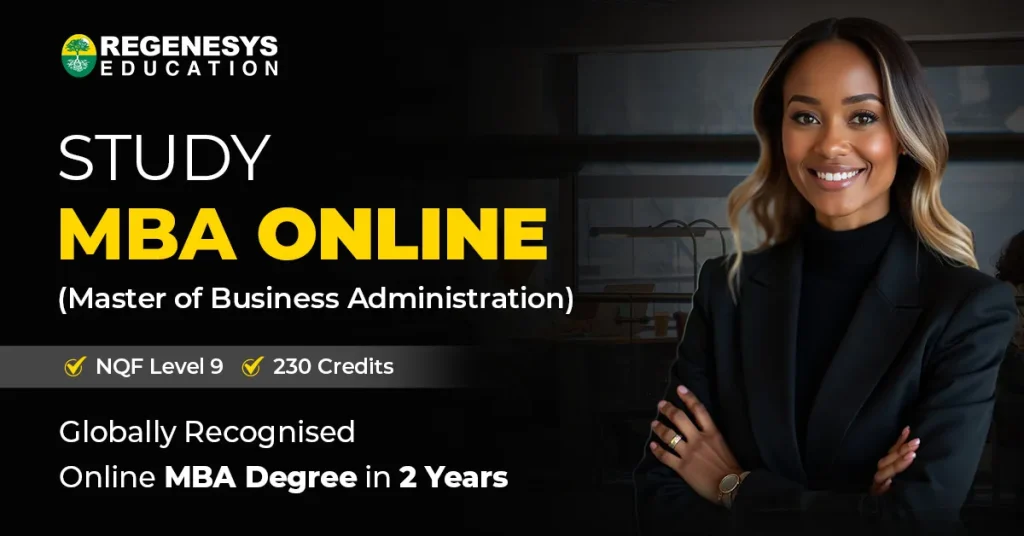
While long-established MBA programmes continue to provide strong management foundations, AI-based study adds more relevance to modern workplaces. The right choice depends on career goals, industry exposure, and learning preferences. The Regenesys AI-powered Master of Business Administration integrates management principles with modern business practices. This programme supports professionals at different career stages.
Planning to strengthen your leadership capability while staying aligned with evolving business environments? Explore the Regenesys Education MBA programme and take the next step in your professional journey.
FAQs
What is the difference between a traditional MBA and an AI-driven MBA?
A traditional MBA focuses on management theory and leadership. An AI-driven MBA includes data-supported decision-making and digital business tools.
Is an AI-enhanced MBA more valuable than a traditional MBA?
Value depends on career goals. AI-enhanced MBAs suit technology-influenced roles, while traditional MBAs support general management paths.
Are AI-enhanced MBAs suitable for all industries?
They are especially useful in data-driven and operational environments, but may be less critical in roles with limited technology use.
How does AI improve the learning experience in MBA programmes?
AI supports practical decision analysis, performance measurement, and evaluation of real-world business problems.
Can AI in MBA programmes replace professors?
No. AI supports learning tools, while academic guidance, judgement, and mentorship remain central to MBA education.