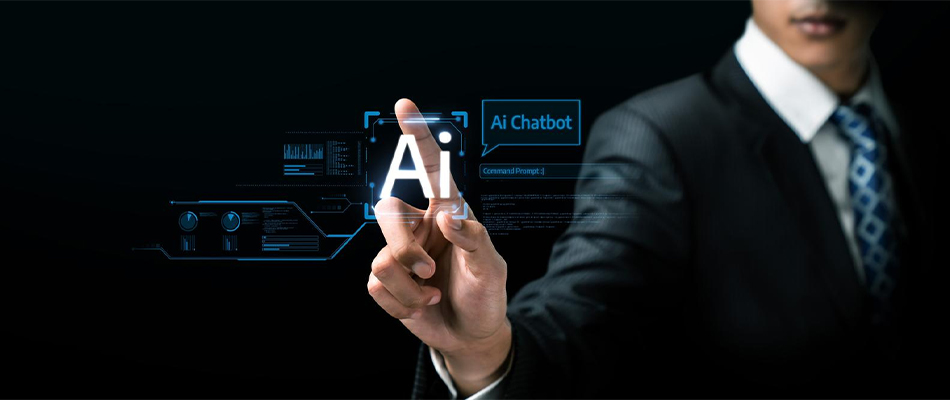

Artificial Intelligence is changing how everyday work gets done. Businesses worldwide are using smart technologies to improve operations, whether handling routine tasks or analysing data. AI in the workplace helps organisations work faster and smarter, making processes more efficient and flexible.
AI is no longer a futuristic idea but a practical tool. Many companies are growing and adapting to this digital change. It supports better decision-making, saves time, and improves efficiency overall.
In this article, we will explore artificial intelligence in the workplace, the role of AI, key benefits, real-world examples, and the future of AI.
Table of Contents
What Is Artificial Intelligence in the Workplace?
Artificial intelligence in the workplace refers to the use of smart systems that support how people work and make decisions.
It improves speed, accuracy, and coordination within teams. Technologies like machine learning, natural language processing, generative AI, and robotic process automation help reduce manual effort.
As AI has become easier to use, it is now part of everyday business operations across departments. This growing adoption shows how deeply AI is merging into modern organisations.
AI is commonly applied in the following areas:
- IT teams use AI to detect and resolve system issues early
- HR teams use it to screen candidates and support employee engagement
- Finance teams rely on AI to detect anomalies and forecast trends
- Marketing teams use AI to personalise campaigns
- Sales teams apply AI to predict customer behaviour
- Supply chain and customer service teams use AI to improve responsiveness
Read: How is Artificial Intelligence transforming business?

Why AI Adoption Is Growing in Organisations?
The rapid adoption of artificial intelligence in the workplace is just another byproduct of fast-paced digital transformation.
AI technology in the workplace makes it easier for companies to process information faster and highlight insights that manual methods cannot achieve.
As competition increases, businesses view AI as a strategic advantage rather than a support tool. According to McKinsey, nearly 65% of businesses now use AI in at least one area, showing how far AI adoption has come.
Key drivers include:
- Increasing volumes of data require analysis
- Demand for faster decision-making
- Need for operational cost optimisation
- Expansion of remote and hybrid work models
- Rising expectations for personalised customer experiences
Benefits of AI in the Workplace
AI supports better productivity, stronger decision-making, and a much more positive employee experience. It reduces manual effort, and as a result, businesses get to focus on growth instead of routine tasks.
These advantages show how AI adds value beyond automation.
The visible benefits of AI at work across teams and operations are:
- Increased productivity through task automation
- Faster and more accurate decision-making
- Higher revenue collected by improved efficiency
- Better employee experience by reducing burnout
- Stronger learning and skill development
- Greater flexibility and long-term competitiveness
Also read: AI and Automation in Business – BBA Career Opportunities.
Real-World Examples of AI in the Workplace
Research shows that AI is already influencing how employees and leaders experience work.
Many organisations are using AI tools across HR, operations, and leadership functions. However, studies reveal a clear gap between how leaders adopt AI and how employees experience it on the ground.
Some of the real-world findings that highlight both progress and challenges in AI adoption are mentioned below:
- BCG’s research highlights a “silicon ceiling,” where frontline AI usage has stalled at around 51%.
- Pew Research shows half of workers feel more concerned than excited about AI.
- Kyndryl reports that 95% of companies invest in AI, but only 14% align it with workforce goals.

AI Tools and Platforms Used in Businesses
Businesses use a variety of tools to incorporate AI into everyday operations. These tools help to automate tasks, analyse data, and support better decisions across teams.
The choice of platform depends on what the organisation wants to achieve. When the right tools are used, AI can deliver stronger results.
Common AI tools used by businesses include:
- Machine learning platforms for predictions and insights
- Data analytics tools for faster and clearer reporting
- Robotic process automation software to handle repetitive tasks
- Cloud-based AI services that scale easily
- AI-powered CRM systems to improve customer relationships
Impact of AI on the Workforce
Artificial intelligence is not about replacing tasks. It’s about changing how people work, collaborate, and grow their skills.
Employees are increasingly working alongside AI systems. These systems handle repetitive tasks and provide insights that support smarter decisions. This allows humans to focus on creativity, strategy, and problem-solving.
Key workforce changes include:
- New job roles
- Demand for digital skills
- Focus on problem-solving
- Reduced repetitive work
- Human and AI collaboration
Read: All About the Impact of AI in Public Services
Challenges of Implementing AI at Work
Adopting AI in business offers significant opportunities, but it also presents significant challenges.
Organisations often struggle with both technology and people factors during implementation. These challenges are not impossible to overcome. With planning, training, and strong leadership, companies can address these obstacles.
Key challenges include:
- Skills Gap – Many employees lack the technical knowledge and understanding that is required to work efficiently with AI systems.
- Losing empathy in customer service – AI may handle routine tasks, but it can’t fully replicate human empathy in customer interactions.
- Not adding a human element– AI outputs may lack nuance, context, or creativity, which may affect the quality of work.
- Addressing fear of job loss– Workers may worry that AI will replace their roles, creating anxiety and resistance.
- Over-relying on third-party integrations – Dependence on external AI services can create technical risks and limit flexibility.
- Identifying the correct problem to address– Organisations sometimes implement AI without clearly identifying the actual problem.
AI and the Future of Work
AI is changing the design and performance of jobs across industries.
Along with improving productivity, AI is also reshaping roles and skill requirements. In the future of Artificial Intelligence in the workplace, tasks will be automated, but new roles will emerge that will require people to work closely with technology.
Key trends shaping the future of work include:
- Millions of workers may need to shift into new roles and career paths
- Companies using AI at an operational level report faster growth
- New technology-based job roles will emerge
- Upskilling and reskilling will become a priority for organisations
- Human+AI collaboration will define everyday work

Explore Our Other Programmes
Conclusion
Artificial intelligence is already a core part of how modern organisations operate. From improving productivity and decision-making to reintroducing job roles and daily workflows, AI is influencing nearly every function of the workforce.
While its benefits are clear, successful adoption depends on how well organisations balance technology with people, skills, and trust.
Regenesys School of AI focuses on building practical and industry-relevant AI knowledge. The school provides individuals with the skills required to understand AI, apply it responsibly, and adapt to the changing demands of the modern workplace.
Check out Regenesys Education to learn more about our programmes. Take your first step towards building your career in a world shaped by AI.
FAQs
How is AI used in the workplace?
AI is used to automate routine tasks, analyse data, and support faster, more accurate decision-making across teams.
What are the advantages of AI in the workplace?
AI improves productivity, efficiency, decision-making and enhances the employee experience while reducing manual effort.
Which of these is an example of AI at work in offices?
Using AI to screen job applications, detect financial anomalies, or personalise marketing campaigns is common in offices.
How do I use AI in my office work?
AI can be used through tools that automate repetitive tasks, analyse information, and support everyday work decisions.
How can AI improve workplace efficiency?
AI improves efficiency by saving time, reducing errors, and helping teams work faster and smarter.