
Postgraduate qualifications have become an increasingly important factor in career progression for South African professionals. With organisations seeking leaders who can manage complex projects, make strategic decisions, and drive innovation, advanced qualifications help individuals stand out in competitive job markets. Pursuing postgraduate study also offers opportunities for higher earning potential and expanded career mobility. Regenesys Education provides industry-aligned postgraduate programmes that combine practical application with flexible learning formats suitable for working professionals.
In this article, we will explore the benefits of postgraduate study, top choices for postgraduate study in South Africa and careers graduates can explore.
Table of Contents
Why Consider Postgraduate Studies in South Africa?
Postgraduate study equips professionals with specialised knowledge and skills that are increasingly sought after in the South African labour market.
For working professionals, flexible learning options are crucial, allowing study alongside ongoing career responsibilities. Postgraduate study also aligns closely with labour market trends, ensuring graduates acquire competencies that are directly relevant and add long-term value to their careers.
Some of the reasons to pursue postgraduate study in South Africa include:
- Career Advancement: Enhanced opportunities for promotion into management, leadership, and specialist positions.
- Leadership Development: Cultivation of strategic thinking, decision-making, and executive-level skills.
- Industry Relevance: Programmes are designed to meet current labour market demands and sector-specific competencies.
- Specialisation Opportunities: Allows professionals to deepen expertise in a chosen field such as business, HR, digital marketing, or public management.
- Increased Earning Potential: Advanced qualifications often correlate with higher salaries and improved job security.
Types of Postgraduate Programmes
South African higher education offers multiple pathways for postgraduate study, depending on career goals and academic background. Each pathway is designed to develop skills, knowledge, and practical expertise relevant to professional advancement.
1. Postgraduate Diplomas (PGDip)
PGDip programmes are aligned with NQF Level 8, are typically 12 months in duration and require candidates to have completed an undergraduate degree. These allow professionals to gain specialised knowledge before committing to a full Master’s programme.
They are ideal for individuals who have completed an undergraduate degree, have work experience, and are seeking practical skills that can be immediately applied in the workplace.
Some postgraduate diplomas that professionals can pursue include:
- Public Management: Focuses on governance, policy implementation, and strategic leadership within public sector organisations.
- Business Management: Develops advanced skills in strategic planning, organisational development, and leadership for corporate or entrepreneurial contexts.
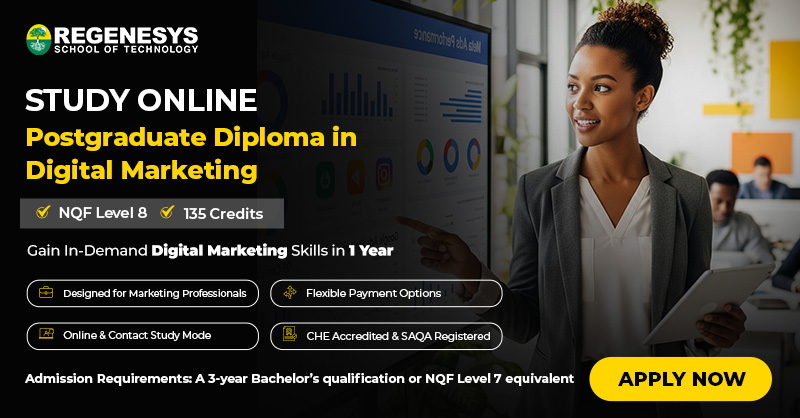
- Digital Marketing: Equips learners with practical skills in online campaigns, analytics, social media strategy, and brand development.
2. Honours Programmes
Honours programmes bridge undergraduate and master ’s-level study. They combine research and applied learning, preparing professionals for leadership roles or further academic progression. Honours degrees offer an in-depth understanding of a chosen field while fostering analytical and problem-solving skills.
3. Master’s Programmes
Master’s degrees provide advanced research, strategic insight, and leadership development. These NQF Level 9 programmes are generally 2 years in duration and are structured to accommodate working professionals through flexible delivery options such as online, part-time, or blended learning.
Completing a Master’s programme equips graduates with the knowledge and practical skills required for executive, specialist, and research-focused roles across various industries.
Some features and benefits of Master’s programmes include:
- Advanced Research Skills: Develop the ability to analyse complex problems and produce evidence-based solutions.
- Strategic Leadership Development: Strengthen decision-making, planning, and organisational leadership capabilities.
- Industry-Focused Modules: Gain practical knowledge directly applicable to your professional environment.
Understanding Programme Structures
Postgraduate programmes differ in structure depending on the level of study and intended outcomes. Postgraduate Diplomas (PGDip) focus primarily on core modules, equipping professionals with concentrated knowledge and practical skills applicable immediately in the workplace. These programmes are ideal for those seeking to deepen expertise without committing to extensive research.
Master’s programmes, in contrast, offer greater flexibility and can be only coursework or research, or a combination of both. At Regenesys Education, Master’s programmes are structured as a combination of coursework and a dissertation, providing both practical application and research experience. This ensures that graduates are prepared to address complex organisational challenges and contribute original insights in their field.
Listed below are some features of the postgraduate programme structure:
- Core Modules: Fundamental subjects provide essential knowledge and skills relevant to the field.
- Electives (where applicable): Optional modules allow professionals to specialise or explore complementary areas.
- Research or Project Components: A dissertation allows students to develop research skills and analytical thinking in a specialised field.
- Flexible Delivery Methods: Online and contact learning formats accommodate working professionals.
Skills Developed Through a Postgraduate Programme
Postgraduate study equips professionals with a range of advanced skills that enhance their ability to perform in leadership, specialist, and strategic roles. These skills are not only applicable to current work responsibilities but also strengthen long-term career prospects, positioning graduates to tackle complex challenges and contribute meaningfully to their organisations.
At Regenesys Education, postgraduate programmes are designed to develop both practical competencies and critical thinking abilities.
Some of the skills developed through postgraduate studies include:
- Strategic Leadership: Ability to make informed decisions, manage teams, and drive organisational growth.
- Project Management Expertise: Planning, executing, and monitoring projects effectively within diverse professional environments.
- Specialist Knowledge: Deep understanding of a chosen field, whether in Public Management, Business, Digital Marketing, or Human Resources.
- Critical Thinking and Problem-Solving: Enhanced ability to assess situations, anticipate challenges, and propose innovative solutions.
- Communication and Stakeholder Management: Strengthened skills in presenting ideas, negotiating, and collaborating with diverse teams.
- Adaptability and Self-Management: Improved time management, prioritisation, and ability to balance work, study, and personal commitments.
Programmes Available at Regenesys
For professionals seeking career advancement, Regenesys Education offers postgraduate programmes designed for working individuals. These programmes are flexible, practical, and industry-aligned, allowing learners to apply new skills in their professional roles immediately.
|
School |
Postgraduate programme |
|
Business School | |
|
Postgraduate Diploma in Project Management | |
|
Postgraduate Diploma in Business Management | |
|
Doctor of Business Management | |
|
Public Management |
Postgraduate Diploma in Public Management |
Read more on NQF Level 8 vs NQF Level 9: Postgraduate Pathways in South Africa
How to Choose the Right Programme?
Selecting the right postgraduate programme is a strategic decision that should align with both your professional ambitions and personal circumstances. Choosing carefully ensures that your investment in education translates into meaningful career growth and practical expertise. Working professionals should consider multiple factors to identify a programme that fits their current role, future goals, and lifestyle.
Listed below are some factors candidates must consider when choosing a postgraduate programme:
- Define Career Objectives: Determine whether your goal is career advancement, acquiring specialised skills, or preparing for research and academic roles. This clarity will guide your programme choice.
- Assess Professional Experience and Availability: Consider your current work commitments, industry experience, and how much time you can dedicate to study without compromising performance.
- Evaluate Mode of Delivery: Choose a format that suits your schedule and learning preferences, whether online, blended, or in-person. Flexibility is crucial for balancing work, study, and personal life.
- Verify Accreditation and Recognition: Ensure the programme is nationally accredited and recognised by industry bodies, enhancing both credibility and career mobility.
- Seek Professional Guidance: Leverage the expertise of Regenesys advisors to match your study options with career aspirations and long-term goals.
Read more on Know the Top Skills That Define the Postgraduate Diploma in Public Management Workplace Relevance
Career Opportunities After Postgraduate Studies
Completing a postgraduate programme opens the door to a wide range of career opportunities for professionals, enabling them to assume leadership, specialist, and entrepreneurial roles. These qualifications provide the knowledge, strategic insight, and practical skills needed to make a meaningful impact in organisations across multiple sectors.
Listed below are some career paths that graduates can explore:
Executive and Leadership Roles:
- Chief Executive Officer (CEO)
- Senior Executive or Manager
- Management Consultant
- Public Works Manager
Project and Operational Management:
- Project Manager
- Project Co-ordinator
- Project Analyst
- Project Administrator
Specialist and Advisory Roles:
- Public Policy Analyst
- Economic Consultant
Digital and Marketing Leadership:
- Digital Marketing Manager
- Media Strategist
Read more on Top Government Roles Requiring a Postgraduate Diploma in Public Management

Conclusion
Postgraduate qualifications have become an essential component of career advancement for South African professionals. Advanced qualifications not only strengthen leadership and specialist capabilities but also broaden career mobility and open doors to executive and advisory roles.
Whether you pursue a Postgraduate Diploma or a Master’s degree, these programmes equip graduates with the knowledge, skills, and strategic insight required to excel in senior positions across business, public administration, and specialist sectors.
Visit the Regenesys Education website to explore our accredited postgraduate programmes across business and public management.
Top Choices for Postgraduate Study in South Africa – FAQ
What is the difference between a Postgraduate Diploma and a Master’s programme?
Postgraduate Diplomas focus on core modules and practical skills, while Master’s programmes include coursework, research, or a combination of both, often requiring a dissertation.
Can working professionals study part-time at Regenesys?
Yes, Regenesys offers flexible online and contact learning options to accommodate working professionals.
What are the admission requirements for postgraduate programmes?
A completed undergraduate degree is required for PGDip programmes, while Master’s programmes require an NQF Level 8 qualification or equivalent.
How long does it take to complete a Postgraduate Diploma or Master’s at Regenesys?
PGDip programmes typically take 12 months, while Master’s programmes usually span two years, depending on study mode.
Are Regenesys programmes nationally recognised and accredited?
Yes, all postgraduate programmes at Regenesys are accredited and aligned with South African higher education standards.