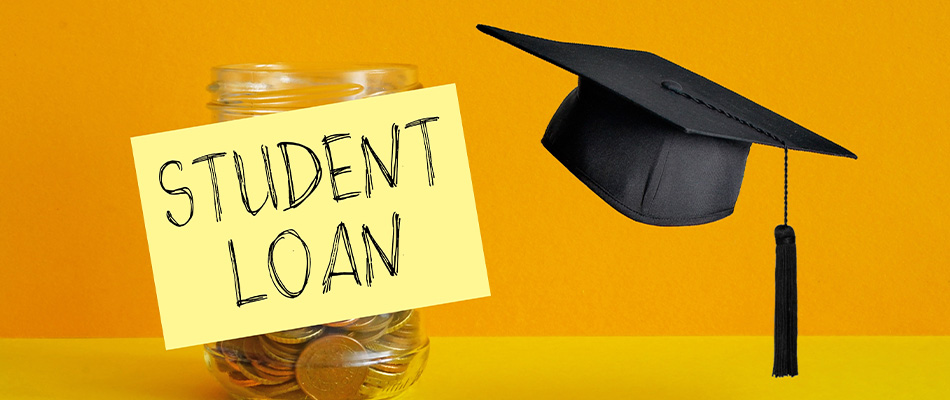
Access to student loan funding is critical to enabling individuals to pursue advanced qualifications, such as an MBA and other higher education programmes. By providing financial support to capable students who may lack immediate means to fund their studies, student loans promote educational advancement, skills development, and long-term economic growth.
Globally, student loan systems have enabled millions of learners to access quality education, strengthen their career prospects, and contribute meaningfully to society. The same principle holds true in South Africa, where education financing remains a key mechanism for expanding access to postgraduate studies.
In this article, we examine MBA student loans in detail, including how they work, eligibility requirements, available funding options, and important considerations before applying. This overview helps prospective MBA students make informed, confident decisions about financing their postgraduate education.
Table of Contents
Read More On : Best Education Loans For Students In South Africa

Who Finances Student Loans?
Providing loans to prospective students planning to attend tertiary institutions is a major business in SA, and several institutions benefit from the annual applications.
Some of these are:
1. National Student Financial Aid Scheme (NSFAS)
The NSFAS is a South African government initiative primarily created to encourage indigent students to access tertiary education. This agency is the largest student loan provider in South Africa, with up to R30bn allocated to provide financial aid to 690,000 South African citizens (2018 figure).
The NSFAS came into existence by way of the National Student Financial Aid Scheme (Act 56 of 1999) as a bursary scheme. The Department of Higher Education and Training funds the programme yearly.
Its primary aim is to provide financial aid to qualified students pursuing academic programmes at South African public universities and other Technical and Vocational Education and Training (TVET) colleges.
2. Commercial Banks
The myriad commercial banks operating in South Africa offer similar yet unique financial aid packages to prospective students.
Individuals pursuing an MBA may approach such institutions for financial aid, but should be prepared to pay interest on the loan afterwards.
3. Private Business Schools accredited as a Financial Service Provider
South African business schools are leveraging sections of South African law that allow them to act as financiers of student aid for individuals who register to study with them.
This service is provided in conjunction with participating banks and attracts about 12% interest on the original capital issued by the bank/financial institution.
Also read: MBA Requirements in South Africa

How Does Student Loan Financing Work in South Africa?
The three methods of financing student loans differ in their characteristics, even though their objectives are the same: to provide financial aid to students who lack the means to pay for their studies.
1. National Student Financial Aid Scheme (NSFAS)
Students from homes where the combined annual income of their nuclear family does not exceed R350,000 are eligible to apply for the loan. Although the loan is interest-free, it must be repaid after the student graduates and begins earning a salary.
After graduating and getting employed, the student (now employed) is expected to begin repayment of the loan. Students who pass all their registered courses have a portion of their loan converted into a bursary (a portion written off as a reward for excellence).
Click here for more information about NSFAS and how to apply
Note: the NSFAS student loan facility applies to public tertiary institutions only. To access student aid for studying an MBA programme at a private tertiary institution, read below.
2. Commercial Banks
Several registered South African commercial banks offer student loans to individuals. Such financial aids target potential working-class students. Regardless, such loans are available even if the prospective MBA student is not yet employed. However, they must provide a surety to guarantee the loan. Such a surety/guarantor must be gainfully employed and earn at least R5,000 per month.
Two vital conditions (among others) must be met prior:
- The guarantor or employed student must have a good credit rating
- The guarantor or working student must maintain a positive affordability rating (i.e. he/she must show that their monthly income does not exceed their monthly expenditure).
If the student meets all conditions and the loan is approved, they are expected to make monthly interest repayments (typically at 10%) on the outstanding balance throughout the period of study.
Once the student graduates, they are expected to begin repaying the principal monthly.
Read also: MBA Cost in South Africa

3. Business Schools Accredited as a Financial Service Provider
This option is similar to the above, but with a slight variation. Whereas the due diligence procedure is similar to that of banks, the apparent difference is that the student repays the capital and interest (at 12.5%) together monthly from the commencement of study until the loan is liquidated.
Note, however, that the educational institution does not provide the funds; instead, it allows students to access its programmes only after the bank or financial institution it partners with has approved the funding/loan.
Read More On : Student Loans & Education Financing Guide
Explore Our Other Programmes

Conclusion
So, you see, getting an MBA degree is not that difficult or out of reach. With the right student aid plan, you too can fulfil your dreams and go on to rule your world.
An MBA degree will shoot you up the ladder in your career, instilling in you all the relevant skills and knowledge required to lead people effectively, manage resources efficiently, and become a thought-leader.
Want to know more? Click here to find out what an MBA really entails and the most lucrative elective courses you can choose.
FAQs
Can I get an MBA student loan in South Africa if I study at a private institution?
Yes. While NSFAS funding applies only to public universities and TVET colleges, students pursuing an MBA at private institutions can access funding through commercial banks or business schools accredited as Financial Service Providers, often in partnership with financial institutions.
Is NSFAS funding available for MBA programmes?
No. NSFAS funding is limited to undergraduate and certain postgraduate programmes offered at public institutions. MBA programmes, which are typically offered by private business schools, are not covered under NSFAS.
Do I need to be employed to qualify for an MBA student loan from a bank?
Not necessarily. If you are not employed, you can still qualify for a bank-issued student loan by providing a guarantor who is employed, earns a minimum monthly income, and has a good credit and affordability profile.
When do repayments for MBA student loans usually begin?
Repayment terms vary by provider. With bank-issued loans, students often pay interest during their studies and begin repaying the principal after graduation. Some business school–linked financing options require repayment of both capital and interest from the start of the programme.
Is taking a student loan for an MBA worth it?
For many professionals, yes. An MBA can significantly improve career prospects, earning potential, and leadership capabilities. With a structured repayment plan and the right financing option, an MBA student loan can be a valuable long-term investment in your professional growth.